SAN FRANCISCO — When the Seattle Seahawks stepped off their charter and onto the San Jose tarmac, the scene felt low-key rather than celebratory: few players were snapping photos, most wore plain gray sweats, and the group quickly split into four buses to head into town. It was the kind of businesslike arrival common for teams heading to the Super Bowl.
Among the quieter headlines was the likelihood that offensive coordinator Clint Kubiak will soon depart the Seahawks’ staff to become the Las Vegas Raiders’ head coach — a move expected to be finalized after the Super Bowl. That looming change cast a bittersweet tone over the trip for fans and teammates alike. For Seattle, the victory march toward the season’s final game was tempered by the knowledge that the coach who helped shape their offense may not be around when the 2026 season begins.
Coaching turnover of this kind isn’t rare for Super Bowl participants. In recent years, teams have frequently lost key coordinators after big runs, with notable examples including the Philadelphia Eagles (after both of their recent Super Bowl appearances) and the Los Angeles Rams (when Kevin O’Connell left). Those departures have sometimes undermined offensive continuity the following season — a cautionary tale for Seattle.
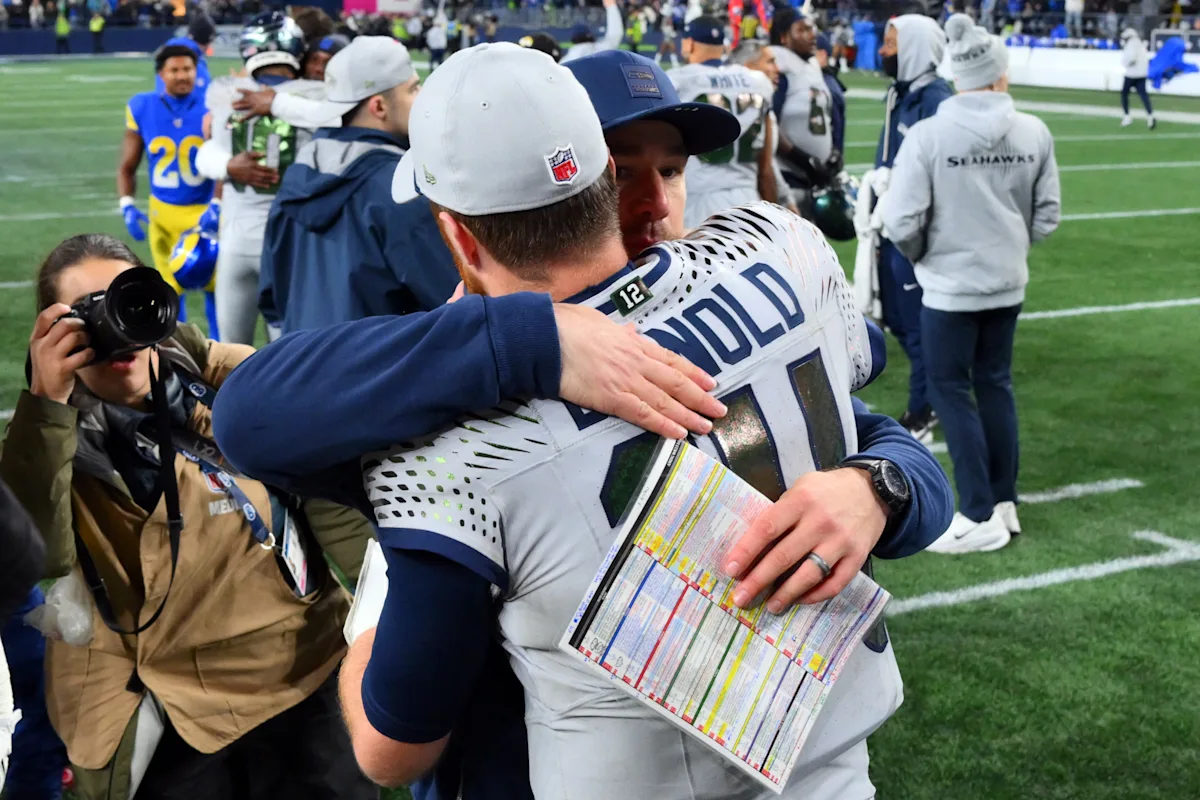
Sam Darnold has repeatedly credited his work with Kubiak as a reason he signed with Seattle; the two had familiarity from their time in San Francisco in 2023, when Darnold was a 49ers backup and Kubiak worked as passing-game coordinator. Darnold has said that scheme familiarity was a major factor in his decision to join the Seahawks, and he has acknowledged that adapting to new terminology and a new play-caller is part of a quarterback’s job.
Finding Kubiak’s successor — whether promoted from inside or brought in from outside — won’t instantly recreate the same quarterback–coach rapport. The Eagles’ recent history shows how internal promotions can fail to preserve offensive effectiveness: Brian Johnson and, later, Kevin Pattullo both struggled in coordinator roles after their predecessors left, and each tenure ended quickly as the offense regressed. That possibility looms for Seattle: Darnold’s earlier play-callers include Kubiak, Kevin O’Connell (with the Vikings), and Kyle Shanahan (in San Francisco), and replacing Kubiak’s particular mix of run balance and situational aggressiveness will be difficult.
Kubiak’s imprint on Seattle’s late-season surge was clear; his game plans mixed the running game early with increasingly ambitious downfield calls that set up key plays and put the outcome in Darnold’s hands. Darnold himself showed resilience late in the year, rebounding from rough regular-season outings to lead the team to the NFC title. Still, the expected departure of Kubiak shifts the Seahawks’ immediate focus to finding a new offensive leader and injects real uncertainty into their outlook for 2026.
Fan Take: This matters because coordinators increasingly become prized head-coach candidates, and their departures can quickly alter a team’s trajectory — especially when a young quarterback’s growth has been tied to a specific scheme. How the Seahawks replace Kubiak will be a test of whether franchises can maintain offensive continuity amid the coaching carousel, and the outcome could influence how teams build and protect their coaching staffs leaguewide.