

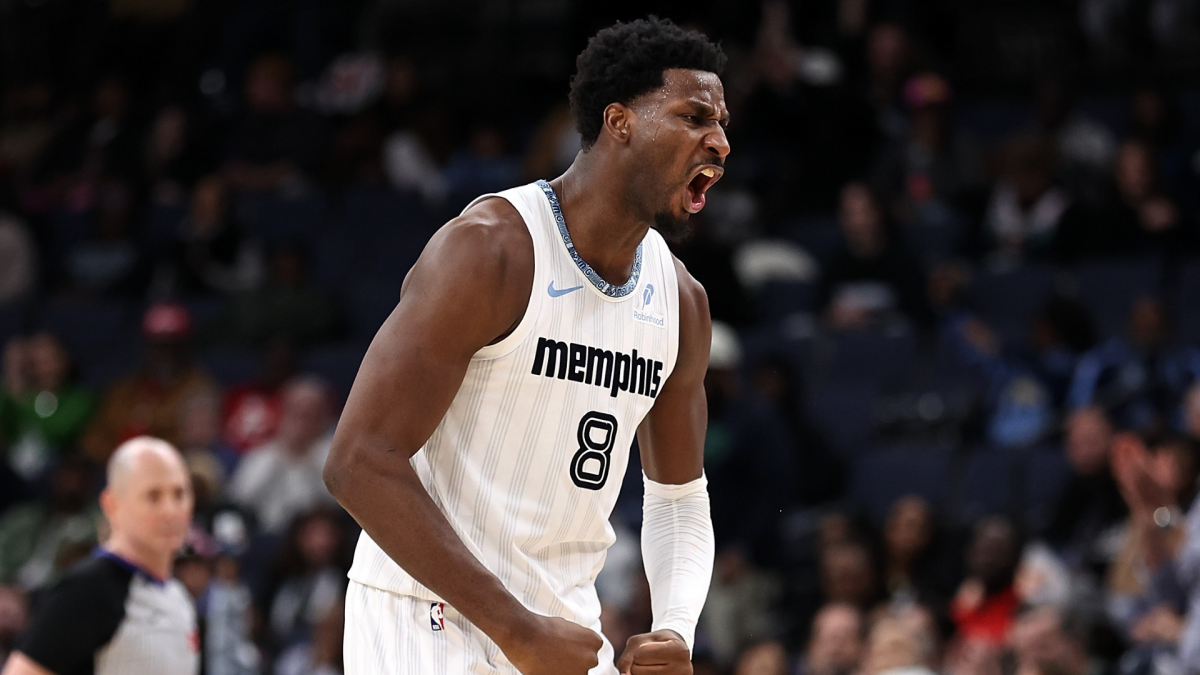
The Memphis Grizzlies and Utah Jazz were involved in the biggest surprise trade at Tuesday’s deadline. ESPN reports that former All-Star and Defensive Player of the Year Jaren Jackson Jr. is moving to Utah, along with John Konchar, Vince Williams, and Jock Landale. In return, Memphis receives Walter Creighton, Taylor Hendricks, Kyle Anderson, Georges Niang, and three first-round draft picks. Jake Fisher details these picks as: the most favorable 2027 first-round selection from among the Jazz, Timberwolves, and Cavaliers; the Lakers’ 2027 pick with top-four protection; and an unprotected Suns 2031 first-round pick.
While Trae Young entered the deadline as an All-Star, his contract was primarily seen as a salary dump. This trade marks the first major blockbuster of the 2025-26 NBA season and will significantly impact the trajectories of both Western Conference teams, which are moving in different directions. Let’s analyze the trade and provide grades for each team.
Utah Jazz: Grade B
About four years ago, the Jazz started their rebuild by trading Donovan Mitchell and Rudy Gobert. Though still near the bottom of the Western Conference standings, signs show that Utah is ready to pivot toward winning. Keyontae George has emerged as a breakout star this season, and the team’s refusal to trade Lauri Markkanen signals a shift away from long-term tanking. Under coach Will Hardy, one of the NBA’s finest, the Jazz’s defense is expected to improve next season, especially with rim protector Walker Kessler set to return from injury. The team can’t afford to remain stuck in rebuilding mode.
Utah, currently the worst defensive team in the league, aims to strengthen its interior defense with Jackson, who forms one of the NBA’s best rim-protecting tandems alongside Kessler. Although Jackson has been envisioned as a stretch five to boost offense, he thrives best as a power forward paired with a bigger center. His defensive abilities will shore up the Jazz’s perimeter defense weaknesses. Their starting lineup next season will feature a notably tall group, with Keyontae George as the shortest at 6-foot-4, and Ace Bailey expected to play shooting guard at 6-foot-9.
Though the trade involved multiple first-round picks, Utah maintains significant control over its draft assets because two of the picks are expected in 2027—a year projected to have a weaker draft—and the other is a 2031 pick from Phoenix. Thus, the Jazz preserve most of their future draft flexibility.
A crucial concern is the draft pick protections involving the Oklahoma City Thunder, from whom Utah owes a first-round pick. The Jazz currently hold the No. 6 lottery spot and likely feel secure, but adding Jackson raises questions about how they will manage their assets and whether they risk losing that pick. Given past violations related to player participation rules, the Jazz will need to carefully avoid complications, especially regarding the 2026 pick.
Financially, the Jazz face challenges. With max contracts for Jackson and Markkanen and Keyontae George’s rookie extension upcoming, salary cap flexibility will be limited. This is a risky position considering Jackson’s injury history, as he will enter his 27-year-old season next year.
Nonetheless, Jackson’s rare skill set as a big who can shoot and protect the rim is invaluable to Utah’s roster. The Jazz now have a foundation to climb the Western Conference ranks, potentially resembling the rapid ascents of teams like the Spurs or Rockets in recent years. The rebuilding phase is over—they’re ready to compete.
Memphis Grizzlies: Grade B+
Since trading Desmond Bane over the summer, a full rebuild for Memphis was inevitable. The Grizzlies are in a situation resembling the Jazz’s 2022 post-Mitchell/Gobert trade, holding a treasure trove of future draft assets. Memphis boasts one of the NBA’s best scouting and development teams, having struck gold with Cedric Coward last year and discovering other draft gems. Beyond the draft picks from this trade, Memphis also retains lottery pick Taylor Hendricks and rookie Clayton, who is highly anticipated.
This deal’s value largely hinges on the draft picks received:
The 2027 Lakers pick may not be high due to the team’s association with Luka Doncic, but with a strong 2027 free agent class approaching, the Lakers might either aggressively improve or settle in a deeper playoff role, giving Memphis options.
The unprotected 2031 Suns pick is the crown jewel here. Phoenix is strong now, but in five years key players like Devin Booker will be nearing the twilight of their careers amid heavy salary burdens. The Suns lack control over their picks, making this asset potentially very valuable.
The “most favorable” 2027 pick among Utah, Cleveland, and Minnesota carries uncertainty. While Minnesota and Cleveland seem solid, the Jazz’s status is less clear. Injuries or setbacks could make this pick quite valuable, especially since the lottery odds are flat.
Though it’s too early to gauge exactly how valuable these picks will be, Memphis consistently maximizes late first-round picks. Draft classes labeled “weak” often carry significant uncertainty but can yield major rewards for savvy teams like Memphis, renowned for their scouting acumen. This trade aligns with Memphis’s strategy of accumulating assets to build through the draft after their initial contention core didn’t sustain.
The elephant in the room remains Ja Morant. The Grizzlies have apparently accepted that he no longer carries trade value, but having acquired substantial returns from Jackson and Bane trades, they are positioned to fully commit to a rebuild. The front office will likely try to move Morant, perhaps seeking a deal similar to Atlanta’s for Trae Young, although it remains uncertain if comparable offers exist.
With Morant gone, Memphis can start fresh, enriched by this trade’s $28.8 million trade exception—the largest in NBA history, according to Bobby Marks. This cap flexibility allows Memphis to pursue significant contracts while stockpiling draft assets, fueling rebuild momentum. It may be a tough few years, but the franchise is poised to learn and improve from its past cycle of contention, aiming for greater success.
Fan Take: This blockbuster trade signals a dramatic shift for two Western Conference teams, reflecting the changing dynamics of rebuilding and contention in the NBA. For basketball fans, it highlights the growing importance of strategic asset management and flexibility, which could reshape the league’s competitive balance in the years ahead.