

Although NASCAR is not traditionally associated with winter sports, its advanced technology is now being used to help Team USA improve speed and performance at the Winter Olympics. NASCAR’s research and development teams are creating virtual models of Olympic athletes, producing life-sized 3D printed replicas, and utilizing wind tunnel and computational fluid dynamics (CFD) testing to optimize their gear for faster runs.
The partnership between NASCAR and the United States Olympic and Paralympic Committee (USOPC) originated thanks to TotalSim, an engineering firm that collaborates with NASCAR on various CFD projects. Dr. Eric Jacuzzi, NASCAR’s Vice President of Vehicle Performance, was invited by TotalSim to host Olympic athletes and officials at NASCAR’s R&D center in North Carolina, where he connected with Mike Levine from the USOPC. Levine, who works in the Performance Pathways and Innovation Division, proposed evaluating Olympic athletes and equipment through NASCAR’s performance expertise, with USA Luge being the ideal initial focus.
Following preliminary talks, Dr. Jacuzzi toured the USA Luge training facility in September and quickly identified how NASCAR’s capabilities could enhance their performance. With approval from NASCAR EVP John Probst, additional resources were secured from NASCAR’s supplier networks for performance tools. The project also involved Chief Brand Officer Tim Clark, who explored commercial opportunities, resulting in both a technical partnership and sponsorship agreement between NASCAR and USA Luge.
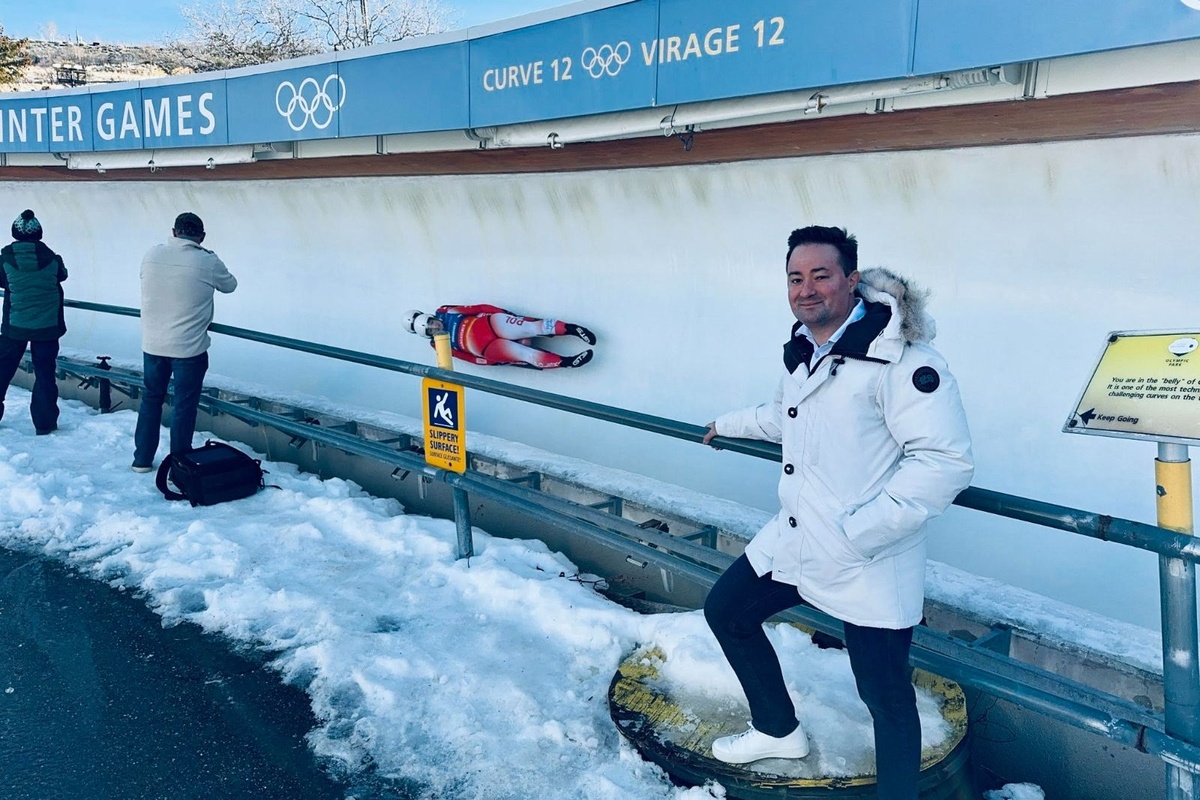
The collaboration advanced rapidly when Dr. Jacuzzi attended the Luge World Cup in Park City, Utah, in December and began technical analysis by building a rig to 3D scan athletes and sleds. These scans are being transformed into CFD models for detailed aerodynamic analysis, and life-sized 3D prints will later be tested in NASCAR’s WindShear rolling road wind tunnel. NASCAR teamed up with Kevin Rau from Digital Reality Scanning—who normally assists with vehicle scans for NASCAR—to capture detailed scans of the athletes and their sleds without requiring extra markers.
Once converted into 3D models, NASCAR and TotalSim analyze the data using CFD. Dr. Jacuzzi mentioned leveraging knowledge from TotalSim’s work with Honda, which supports the U.S. Bobsled/Skeleton team by testing in the Honda Automobile Research Institute’s wind tunnel. This approach helps NASCAR apply proven practices to optimize their models before wind tunnel testing. TotalSim has committed to providing time and resources to help accelerate the development process.
Following CFD analysis, NASCAR will 3D print modular life-size models of athletes and sleds to facilitate aerodynamic testing. Dr. Jacuzzi highlighted the opportunity to make significant performance gains, especially in men’s doubles luge, which currently has less regulation. Using NASCAR’s new 3D Printing Lab and printers like the Stratasys F900 and Fortus 450mc, these modular components can be tested in different configurations to evaluate various shapes and positions.
The initial goal is to refine sled geometry to reduce aerodynamic drag, with wind tunnel testing of the first models planned for this summer. Since current sled designs rely heavily on traditional knowledge, Dr. Jacuzzi believes NASCAR’s data-driven approach—such as lowering sled height like in race cars—could lead to immediate improvements. NASCAR’s aerodynamics experts Chris Popiela and Tracy Halpin have joined the project, which is expected to grow quickly as many are eager to contribute to this unique challenge. The team also sees the venture as an opportunity to gain fresh aerodynamic insights that could benefit NASCAR racing itself.
Dr. Jacuzzi described the partnership as a long-term commitment aimed at giving USA Luge a competitive edge for the 2034 Winter Olympics in Utah. While that event is still years away, NASCAR will focus on yearly incremental improvements starting with the 2026 Luge World Cup. This week, Dr. Jacuzzi will attend the 2026 Winter Olympics in Cortina d’Ampezzo, Italy, to observe and gather data to inform future analyses.
Fan Take: This unique collaboration shows how NASCAR’s cutting-edge technology can transcend traditional racing boundaries and make a real impact on Olympic sports. For NASCAR fans, it highlights the innovative spirit of the sport and suggests that breakthroughs in aerodynamics achieved here could eventually lead to faster, more competitive race cars on the track.