

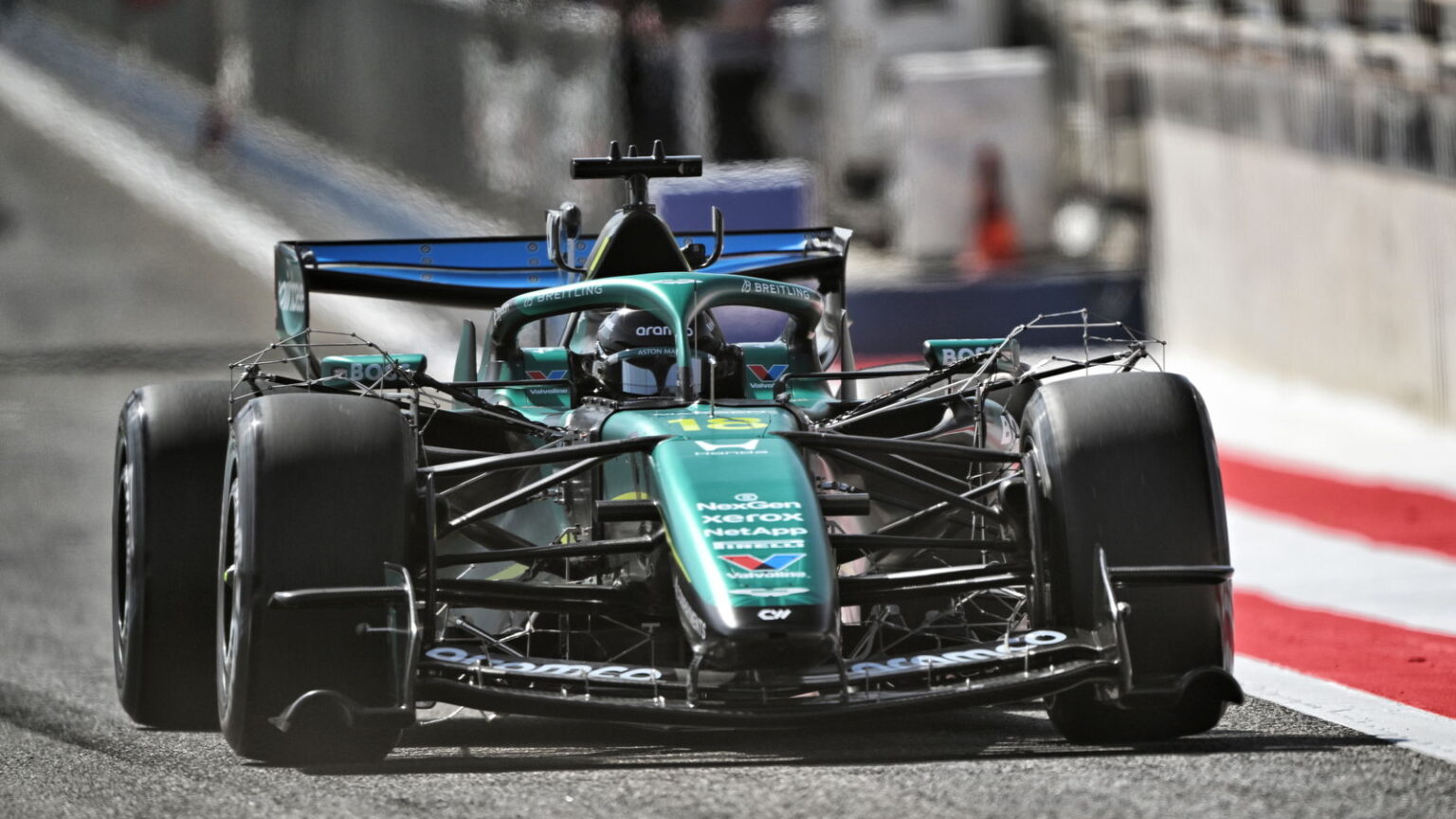
Adrian Newey’s bold Aston Martin F1 car experienced limited track time on the opening day of the 2026 Bahrain testing due to an engine “data anomaly.” Aston Martin attracted attention when their assertively designed AMR26 debuted during the Shakedown in Barcelona last month. This is the first car Newey has designed for Aston Martin after moving from Red Bull at the start of last season.
Newey acknowledged before pre-season testing that Aston Martin lagged several months behind competitors in car development because their wind tunnel was unavailable until April of the previous year. Adding to their challenges, Aston Martin is introducing an aggressive new car that now runs on Honda engines for the first time, having previously used Mercedes power units.
During the first day of Bahrain testing, Lance Stroll was behind the wheel of the AMR26 but managed to complete only 36 laps due to an issue with his Honda power unit. Aston Martin confirmed that a “data anomaly” was found within the unit, which needed further investigation, causing Stroll to miss part of the afternoon session.
“The Aston Martin Aramco F1 Team launched its Bahrain test program today at the Bahrain International Circuit with Lance Stroll resuming driving duties in the AMR26,” the team said in a statement. “Lance completed 36 laps throughout the day. In the afternoon, Honda detected a data anomaly in the power unit that required additional analysis, limiting Lance’s running time.”
This marked the AMR26’s first time on track since its 2026 livery was revealed at Isla, Dhahran, Saudi Arabia. Lance is set to return to driving the car on Friday while Fernando Alonso will take over for the second day of testing.
With limited track time, Stroll’s best lap placed him second to last at 1 minute 39.883 seconds, ahead of only Alpine’s Franco Colapinto, who was slower after causing a track stoppage during the morning session. Leading the times was McLaren’s Lando Norris with 1 minute 34.669 seconds.
Fan Take: This update is crucial for racing enthusiasts because it highlights the teething troubles even the most advanced teams face with new engine partnerships and designs. How Aston Martin addresses these early setbacks could significantly influence the competitive dynamic in the 2026 season, potentially reshaping the Formula 1 landscape.