

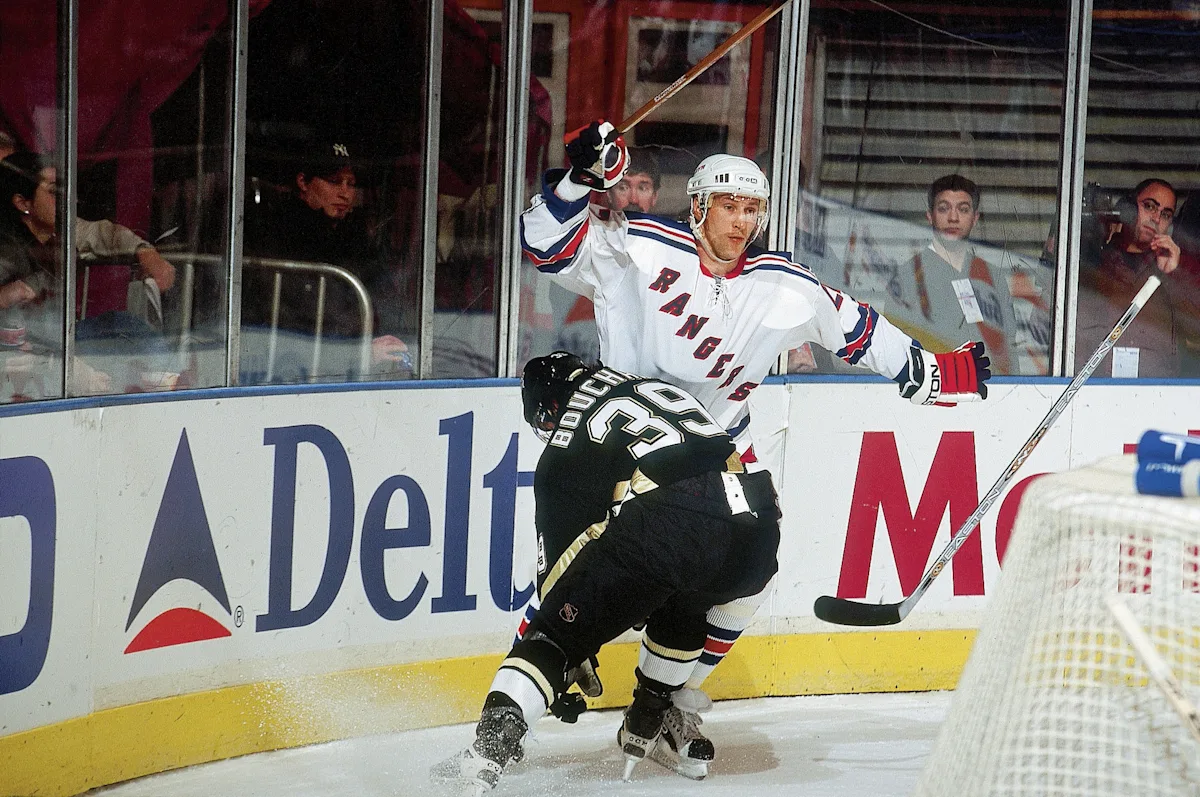
Memories like these remind us of how much things changed for the Pittsburgh Penguins, though those days feel like a distant past now.
At that time, the team’s struggles were evident, and this period might not have marked their lowest point, but it was certainly the dark before the dawn. Kovalev’s trade involved “future considerations,” which translated into $3.9 million in cash—a hefty amount that represented the maximum allowed for a mid-season trade according to NHL rules. This move underscored the Penguins’ financial difficulties, as they were expected to post losses that year. To stretch their budget further, the team also signed veteran players Laukkanen and Wilson, who carried higher salaries, and took on a ragtag group from the Rangers without acquiring any promising prospects.
This era was characterized by sheer survival and desperation, with the franchise far from the stable, competitive team fans know today. Back then, stars like Sidney Crosby and Evgeni Malkin weren’t even on the roster—only the harsh economic realities that forced the team to scrape together funds to stay afloat. The future was uncertain, and it was hard to see how things could improve—especially when the team was losing money, trading away its best players, and slipping on and off the ice, with its competitiveness hanging in the balance since the Jagr trade in 2001.
Of course, the Kovalev trade became a moot point in hindsight. From that bleak start in 2003, it only took five years for the Penguins to land Marian Hossa in 2008—marking a pivotal turnaround. It’s incredible how swiftly the franchise transformed from a struggling organization into a thriving NHL powerhouse.
A series of transformative events paved the way: new Collective Bargaining Agreements tied revenue to player salaries, an agreement with the state led to the building of a modern arena, and the draft process, which brought in stars like Fleury, Crosby, and Malkin, injected new talent and energy into the team. As a result, the Penguins grew into a fully operational franchise, spending heavily while remaining financially stable. The team no longer faces salary caps that threaten to force them to part with their star players like Crosby or Malkin in their prime, nor do they have to question their long-term viability.
Interestingly, in 2011, eight years after he was released, the Penguins re-acquired Kovalev as a rental player in their quest for a playoff spot—a full-circle moment. By then, Kovalev’s return was vastly different from his first stint, all except for the jersey color and Mario Lemieux’s influence.
Back in 2003, the Penguins were technically part of the NHL but struggled to function as a true, viable franchise.
Fan Take: This story highlights how perseverance and strategic rebuilding can transform a struggling team into a championship contender, inspiring fans and players alike. It underscores the importance of stability and investments in talent—reminding us that even the most desperate times can lead to great success in hockey’s unpredictable landscape.