

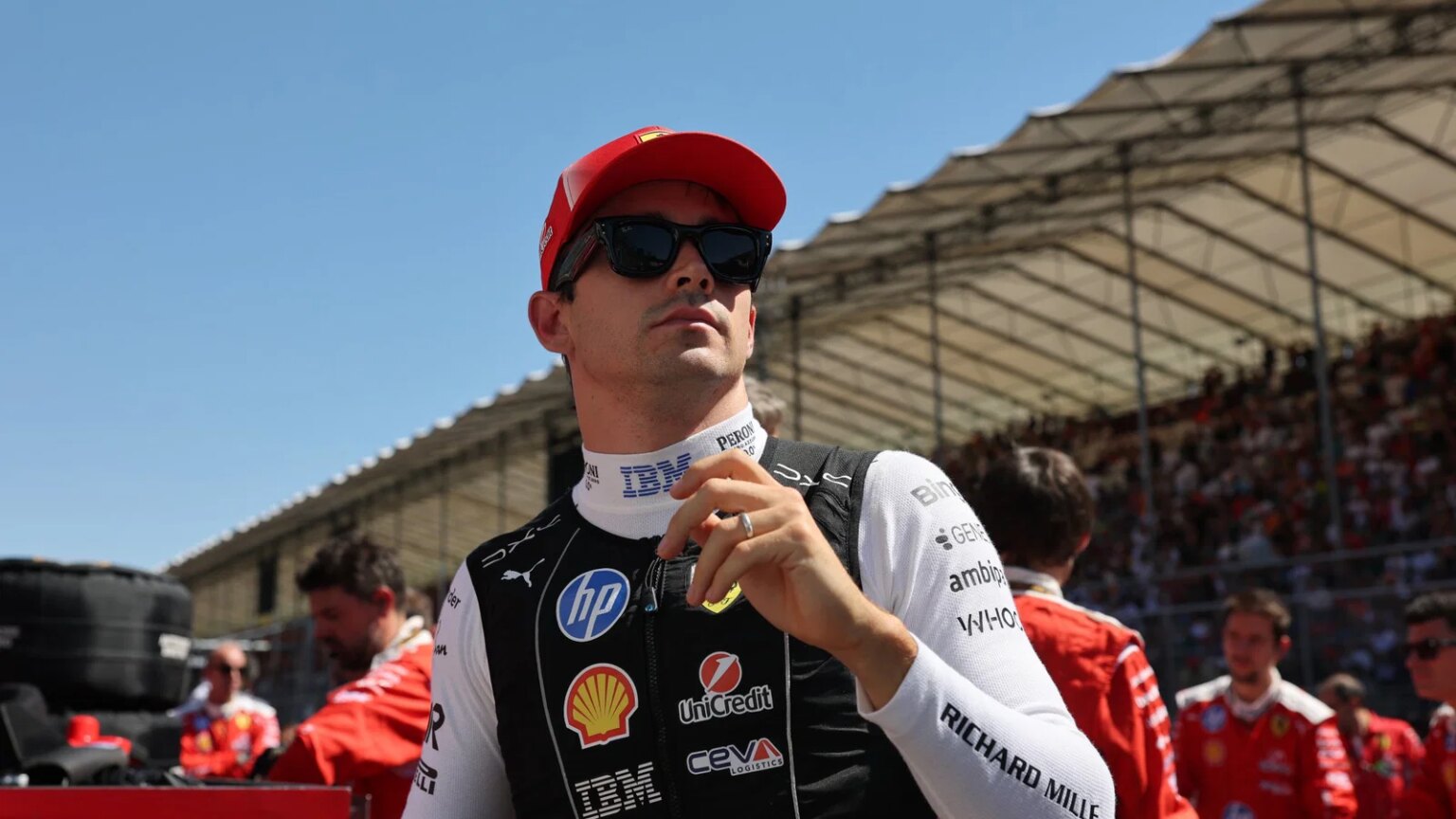
Ferrari has given the green light to reuse Charles Leclerc’s Monza crash engine, but the driver faces a grid penalty at the Azerbaijan Grand Prix after introducing a new power unit. Leclerc, who crashed heavily at Monza’s Parabolica during the second lap, initially had concerns that the updated Ferrari ADUO2 power unit might have been damaged and was thus withdrawn from his use at the Spanish Grand Prix. This left him with less power compared to teammate Lewis Hamilton, resulting in Leclerc being outqualified, although he still led much of the race before finishing fourth.
However, further inspections by the Italian edition of Motorsport have confirmed that the Monza engine suffered no fatal damage, allowing Leclerc to keep it within his season’s allocation. Despite this, it’s expected he will only use this engine for practice sessions at Baku, where a fresh engine will be fitted, causing him to start from the back of the grid. Ferrari team principal Fred Vasseur hinted to Canal+ during the Madrid race weekend that the team is aiming to handle Leclerc’s engine penalty strategically at Baku, a track with a long pit straight that offers overtaking opportunities, possibly lessening the penalty’s impact.
Meanwhile, championship leader Andrea Kimi Antonelli also took an engine penalty at Monza but impressively climbed from 19th on the grid to win his home race. George Russell, Antonelli’s Mercedes teammate, is also expected to face an engine penalty soon, although the timing remains uncertain. Notably, Ferrari’s ADUO2 upgrade has yet to deliver a significant advantage since its debut at Monza, where Leclerc qualified fourth and Hamilton fifth, behind the Mercedes-powered front row lockout.
At the Madrid Grand Prix, Leclerc was a mere 0.006 seconds behind Hamilton in Q3 and less than a tenth off third-placed Max Verstappen’s Red Bull. Ferrari has not featured on the front row since Hungary, where Hamilton was second and Leclerc third behind McLaren’s Lando Norris.
Fan Take: This update on Leclerc’s engine status is crucial for racing fans as it directly influences Ferrari’s strategy and the championship battle, showcasing how technical resilience and smart penalty management can shape race outcomes. The penalty at a circuit like Baku also underscores the tactical depth of Formula 1, where teams must balance performance, reliability, and racecraft to stay competitive.
Source: www.crash.net
