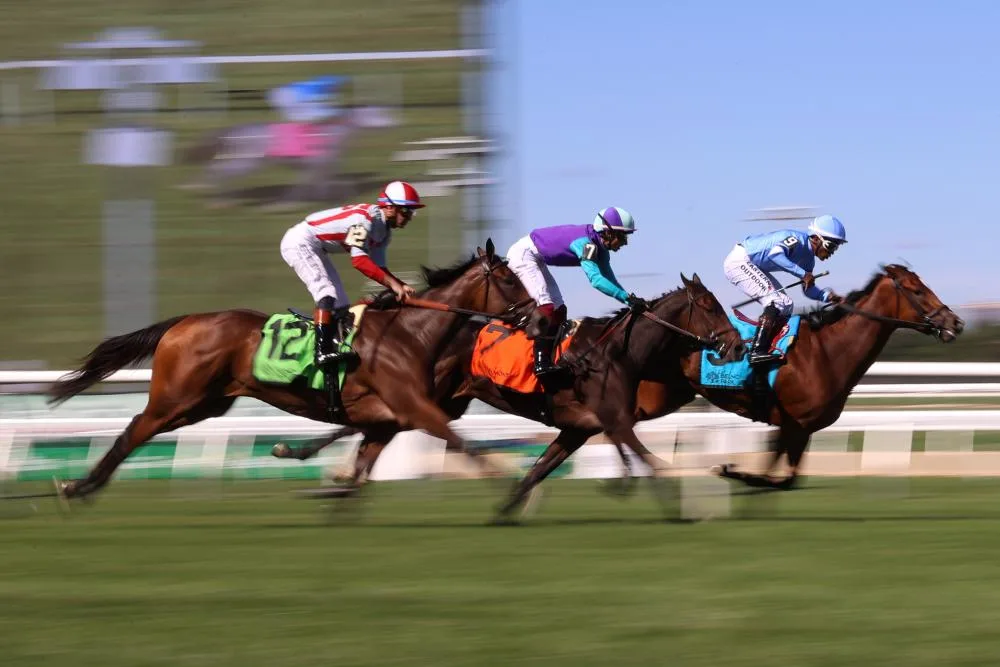
Henry Miller stood on the edge of the newly revamped Belmont Park on Friday, unsure how he felt about the changes. At 59, the Brooklyn native and retired sanitation worker has frequented New York racetracks for 47 years and found the site’s extensive concrete unwelcoming compared to the old Belmont, with its familiar trees, ivy-covered brick, bar, and grandstand. More than anything, he grieved for Aqueduct, the aging Queens racetrack that closed in June as part of the $555 million redevelopment project that made the new Belmont possible.
After more than three years without racing, Belmont Park reopened Friday with drastic changes. The massive grandstand has been replaced by a smaller, sleek glass structure that anticipates smaller everyday crowds, shrinking from 1.25 million square feet to about 300,000. Even Big Sandy, the famed mile-and-a-half dirt track associated with the Triple Crown’s tough final leg, has been retired, replaced instead by tracks modeled after Saratoga’s surfaces and reconfigured finish lines. The facility now includes four new racing surfaces, a paddock 50% larger, and approximately 20 acres of accessible green space. Inside, its ultra-modern design—with bright white walls and polished floors—feels more like a high-tech airport than a traditional racetrack.
Belmont has long been a New York institution since 1905, the stage for legendary moments like Secretariat’s record 31-length victory and American Pharoah’s Triple Crown triumph, and featured in various films and documentaries. This reopening is more than just a facelift—it represents a bold $555 million gamble by New York to downsize horse racing’s physical scale, modernize the experience, and attract a fresh audience amid a sports betting landscape increasingly dominated by other options.
The project was funded by a $455 million state loan, complemented by $100 million from the New York Racing Association (NYRA), which runs Belmont, Saratoga, and until recently, Aqueduct. The state funds will be repaid using NYRA’s share of slot-machine revenues from Resorts World casino near the closed Aqueduct. At the opening ceremony, Governor Kathy Hochul described the investment as a strategic move to create “an international racing hub” that doubles as a versatile entertainment venue for both fans and the wider community.
To facilitate this, NYRA consolidated its downstate operations at Belmont, ending 132 years of racing at Aqueduct and leaving New York City without a thoroughbred track for the first time since 1821. The Aqueduct property, about 100 acres, will be redeveloped by the state into mixed-use space including housing and retail. The new Belmont’s design reflects a reality where giant crowds are rare: it seats about 10,000 inside but can accommodate 50,000 with infield and temporary seating for major events like the Belmont Stakes.
This new era will feature a 46-day fall meet with 72 stakes races worth $17.7 million, and host the Belmont Stakes and the Breeders’ Cup in coming years. Appropriately for a reinvented international venue, the first winner at the new Belmont was British-bred Lisa Joy, trained by Hall of Famer Shug McGaughey, who praised the facility despite acknowledging it still needs some refinement.
Longtime attendees, however, may need time to adjust. Kathie Riccobono, 74, who has visited Belmont for 50 years, appreciated the upgrades but lamented the loss of large crowds and a sense that younger fans lack horse racing knowledge. Attendance was capped at 6,000 during opening weekend and will reduce to 4,000 while construction continues, with only the first two floors currently open. General admission remains affordable at $7–$10, but additional costs like parking and programs can push total expenses up significantly, which some worry could deter the typical bettor who has many gambling alternatives online.
NYRA has also restructured the spectator experience, with general admission on the ground floors offering open access to bars and concessions, while higher-priced reserved areas occupy the upper floors, still under construction. The pricing hierarchy raises questions about accessibility—particularly since BYOB and coolers are banned in the expanded communal spaces, which changes traditions from Aqueduct, known as “the poor man’s track” for its easy access by public transit and low-cost entry.
Aqueduct’s Manhattan-adjacent location, free entry, and casual vibe allowed a diverse crowd of families, retirees, and devoted handicappers to enjoy racing affordably; Belmont remains reachable by Long Island Rail Road, though the experience differs. On Aqueduct’s closing day, many questioned if they would make the trek to Belmont, citing cost concerns. Some, like longtime attendee Joseph Gillespie, embraced the new venue’s upscale vibe, hoping it becomes a Keeneland-style destination that prompts attendees to dress up and enjoy a premium atmosphere.
This reinvention comes as the sport faces national declines: over 40 U.S. racetracks have closed since 2000 amid aging fans, falling attendance, and shifting gambling habits. Compounding this, FanDuel TV—the longtime cornerstone of racing broadcasts—will phase out its linear racing coverage by 2027, signaling a shrinking media presence for the sport. The rise of mobile sports betting, with Americans wagering hundreds of billions annually on sports other than horse racing, highlights the challenge Belmont’s overhaul aims to address.
Belmont’s transformation also aligns with a broader shift in sports venues, which now often serve as year-round mixed-use entertainment hubs. Positioned next to a luxury shopping village and UBS Arena, home to the NHL’s New York Islanders, the revamped Belmont mirrors this trend. Veteran Miller understands the demographic challenge, recalling when Aqueduct could draw tens of thousands even on weekdays. He stresses the need to offer compelling reasons for people to visit in person rather than bet online, underscoring the importance of atmosphere and engagement.
The reopening witnessed a vibrant crowd of around 6,000 under clear skies, complete with a concert and a nine-race card headlined by the $1 million Jockey Club Gold Cup. The star of the day was Forever Young, a five-year-old Japanese stallion and global racing celebrity, who captured the main event and energized an audience that included many younger fans sporting anime-style cosplay—an image quite different from traditional bettors. Forever Young’s dominant victory added a marquee moment to the new Belmont’s debut.
NYRA hopes to attract such new fan bases while maximizing year-round use of the facility. Besides traditional dirt and turf courses, a new one-mile Tapeta track will become the exclusive winter racing surface, consolidating previously split schedules. NYRA is also contemplating shortening the Belmont Stakes from a mile and a half to a mile and a quarter, arguing that modern breeding favors shorter distances.
Together, these changes make Belmont a bold experiment in racing’s future: a smaller, brighter venue blending racing with entertainment, focusing big crowds on select events and catering to customers willing to pay premium prices. Despite some nostalgia, the opening day crowd felt cheerful and hopeful about the venue’s potential. For longtime visitor Riccobono, simply being part of this new chapter was a gift.
While the opening successful blended old and new fans, the real test lies ahead: whether Belmont can sustain energy and attendance on routine race days, without superstar horses, concerts, or the novelty factor. The transformation marks a profound shift in American horse racing’s identity, balancing heritage with an uncertain future.
Fan Take: This reopening of Belmont Park symbolizes both the challenges and opportunities facing horse racing today. By modernizing its facilities and focusing on diverse, year-round use, Belmont is striving to attract a new generation of fans while honoring tradition—a crucial step if the sport hopes to thrive in an era when competition for gambling dollars and entertainment is fiercer than ever.
Source: sports.yahoo.com