


Emily Keogh
Multiple Authors
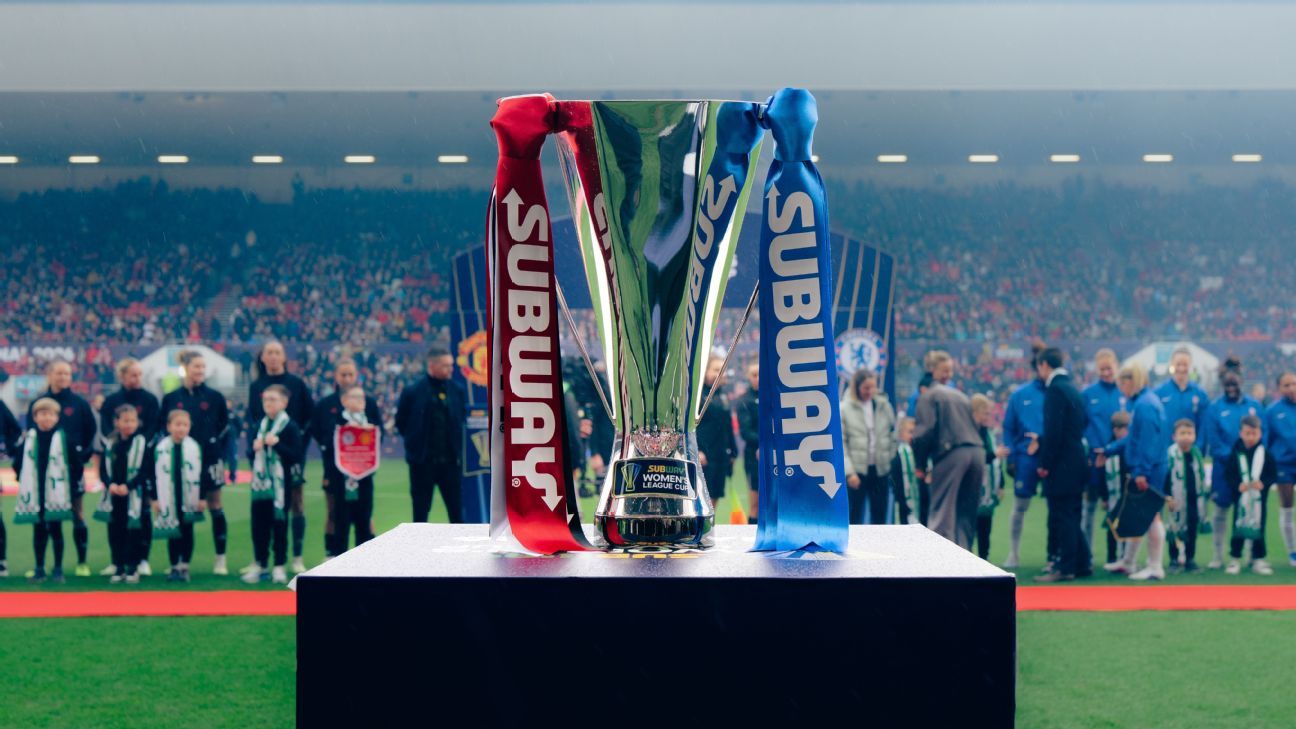
This season, fans of Women’s Super League (WSL) and WSL 2 clubs may have observed the addition of a new tournament: the Players Cup.
However, this isn’t entirely a brand-new event, nor is it open to every club. The competition, which used to be called the League Cup, has undergone a rebranding due to ongoing discussions regarding its format and fairness. Previously, the clubs were divided into northern and southern groups, culminating in a knockout phase and final held in March.
A notable issue existed in the past; clubs participating in the UEFA Women’s Champions League (UWCL) were granted automatic advancement to the quarterfinals, which meant that only five teams, or six if England fielded two clubs in the tournament, could move on from the group stage.
This framework led to a recurring scenario: smaller clubs would compete fiercely, only for the largest teams to join at the quarterfinal stage and dominate. The end result often saw finals contested by teams that had to play just two games to reach that point, with Chelsea, Arsenal, and Manchester City winning the League Cup historically.
This year, a new champion will undoubtedly be decided since these three clubs are ineligible, having entered the UWCL due to a recent rule change prohibiting teams competing in Europe.
This decision carries both positive and negative implications. On one hand, it opens up the competition for a wider pool of potential champions, giving WSL teams a fairer chance for silverware; on the other, it eliminates the possibility for any team to secure the coveted Quadruple.
What is the new Players Cup format?
Last month, organizers conducted the draw for the competition, but the confusing new format raised as many questions as it clarified.
Incorporating elements of the Swiss-style system used in the Women’s Champions League, this new format features a single league table where the top eight advance to knockout rounds. The twist is that matches are organized based on a north-south geographical split, aimed at minimizing exhausting midweek travel while keeping the simplicity of a single league table. This compromise allows regionalization for matchups while maintaining the same qualification spots for all teams.
Each club will engage in six matches from September to December, with three games at home and three away. An additional twist is that if matches end in a draw after 90 minutes, they will go straight to a penalty shootout rather than extra time. The winning side will earn two points, while the losing team still gets one.
Once all teams have played their six matches, the top eight will enter the quarterfinals in January. The first place will face the eighth, the second will compete against the seventh, and so on, with the higher-ranked teams gaining the home advantage. From that stage, it transitions into a conventional knockout format.
However, fixture distribution isn’t entirely even, as not all clubs will encounter the same mix of WSL and WSL 2 opponents. For instance, Everton will match up against two WSL teams and four WSL 2 teams, while London City Lionesses will face three clubs from each division.
This new structure is notably more intricate than the straightforward league-and-knockout model fans may be accustomed to. The goal is to limit travel, encourage competitive matchups, and provide every club with a realistic chance to advance to the knockout phase.
So, do Quadruple ambitions end here?
For clubs hoping to secure a quadruple, that dream is dashed with this year’s format. UWCL teams are barred from participating in the Players Cup, forcing clubs with European commitments to forgo one of the four primary trophies available each season.
This change may not be overly harmful—especially in light of the pressures that come with a Champions League campaign—but it means that Arsenal remains the only team to have completed a Quadruple successfully, achieving this feat back in 2006-07 when they won both the Champions League (then known as the UEFA Women’s Cup) along with every domestic title available.
A domestic Treble is still achievable, yet this will need to be accomplished by teams outside the traditional League Cup powerhouses: Arsenal, Chelsea, and Manchester City. However, one of these teams could still manage a treble by winning the WSL, FA Cup, and Champions League, but this title lacks the same appeal.
The allure of labeling a season as a “Quadruple-winning” year is now out of reach for clubs competing in Europe.
Whether this change adds significance to the Players Cup for remaining clubs is uncertain, but it definitely ensures that for the first time, a new team will hoist the trophy.
Do lower-tier teams have a better chance at winning?
Excluding the three dominant clubs from recent League Cups should ideally present a real opportunity for other teams to contend for trophies.
This comes at a point when the gap between the established elite and the chasing pack appears to be narrowing. Last season, Brighton made it to the FA Cup final, and Tottenham Hotspur reached their first final in 2024; Manchester United has also made two FA Cup finals and reached the League Cup final for the first time last year.
United’s progress occurred during their inaugural Champions League season, although they didn’t advance to the league phase. The eventual League Cup winners, Chelsea, also did not enter the league phase due to their European commitments.
On the other hand, Manchester City, who were not involved in European competition last season, still managed to win the FA Cup and reach the League Cup semifinals.
This background does raise a question: Will the Players Cup become a trophy for the top-four club not engaged in the Champions League? Based on last season’s standings, that would currently be Manchester United.
This scenario is a possibility, yet the top four in the WSL has become harder to predict each season. Teams can rapidly change the balance of power through consistent performance, successful transfer windows, or unexpected victories against the giants. Thus, what appears to be a clear hierarchy can shift dramatically from one season to the next.
This remains to be seen, but the new format undeniably creates an opportunity for lower-tier teams to contend. Those who might have previously struggled to advance beyond the group stage are now presented with a clearer path to potential trophy glory, which could enhance morale.
Managers like Spurs’ Martin Ho and United’s Eva Olid have both emphasized the exciting prospect of aiming for silverware and adding trophies that were once thought to be out of reach. Several clubs have made this a key objective.
Optimism exists, especially given the success of the revamped Champions League format, which has allowed non-elite teams to achieve greater progress, as evidenced by Manchester United and OH Leuven.
This could lead to a more competitive race for silverware and bring in new neutral fans who may continue to follow the competition even post-elimination of their favorite team.
What about player rotation?
Historically, the League Cup has served a significant role beyond mere trophy collection. For many clubs, it has offered a chance to rotate squads, provide minutes for younger or developing players, reintroduce those returning from injuries, and build confidence during challenging league periods.
Maintaining this balance is becoming more complex. For clubs lower in the hierarchy, the challenge often stems from insufficient playing time. Unless players are established internationals, regular starters, or part of squads that advance far in the Players Cup or FA Cup, they might miss substantial competitive minutes.
Conversely, players at larger clubs can find themselves pressed into service for nearly all league matches, playing during international breaks, and going deep into both domestic and European tournaments. New FIFA tournaments, including the Champions Cup and Club World Cup, only add to this crowded schedule.
One crucial note concerning the clubs now excluded from the competition: Arsenal, Chelsea, and Manchester City historically entered the League Cup later in the knockout stages, which meant they didn’t leverage the competition to the same extent as others. Their drive to win often limited their ability to rotate extensively, resulting in starting XIs that were similar to those utilized in the league and European play.
The revamped format may thus benefit both ends of the spectrum: it could provide more playing time for under-utilized players while also enabling coaches to manage the workloads of those who participate heavily across various competitions.
A statement from the WSL indicated that players consulted regarding the format changes responded positively: “Players we spoke with about the changes are excited by the new format, the increase in matches, and the promising opportunities for winning silverware. They view the competition as valuable and expect that the structure will enhance competitiveness, keeping player welfare and development at the forefront.”
Ultimately, it’s a balancing act for clubs and the league. They must juggle player welfare, development, competitiveness, fixture congestion, and the aim to sustain meaningful competitions. This complexity explains why simply abolishing the League Cup wasn’t the solution despite its shortcomings.
Instead, the Players Cup seeks to create a broader impact by offering more players valuable minutes, establishing another route to trophy success, and striving to do all this without unnecessary additional strain on those already logging significant playing time.
This transformation in the cup structure is pivotal for soccer fans, as it could level the playing field and encourage more diverse competition among clubs. Fans can look forward to exciting matches and the emergence of underdogs who can finally chase silverware, making the sport even more compelling to follow.
Source: www.espn.com