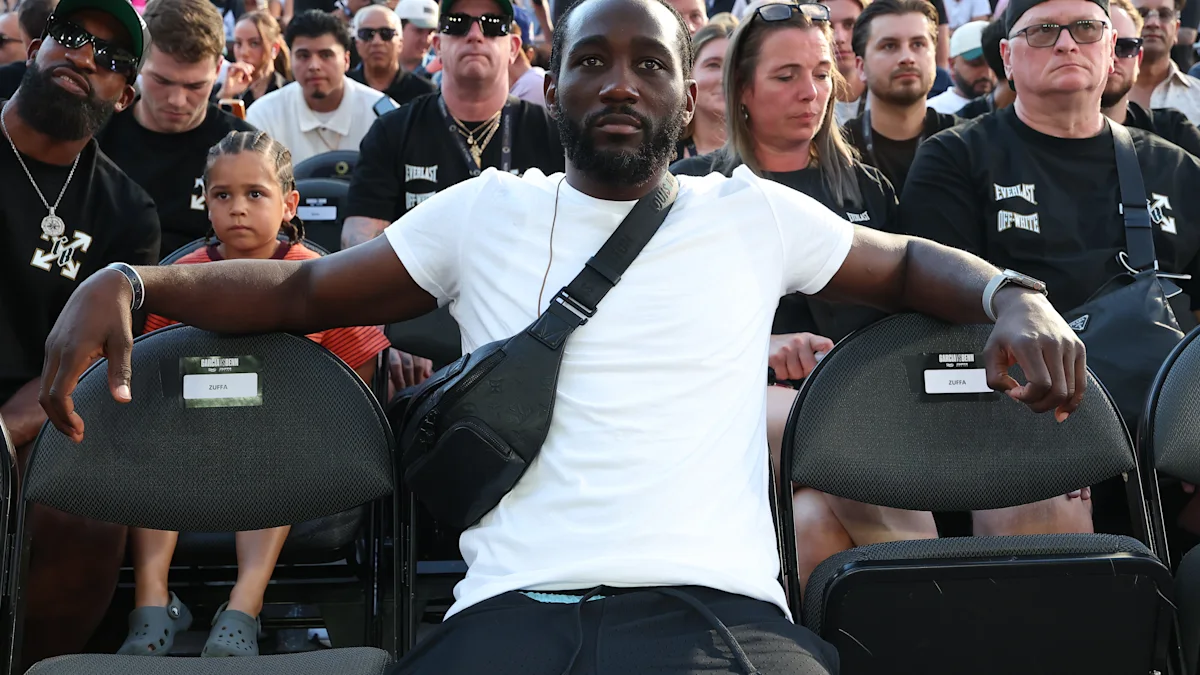
Terence “Bud” Crawford was remarkably dominant in the mid-range zone of the ring—a space where a fighter is neither fully inside nor completely outside striking range. In this no-man’s land, Crawford proved too resilient for brawlers and too skillful for technical boxers, confidently daring his opponents to dictate the fight’s outcome while he fluidly switched stances and imposed his will. Since retiring last year, Crawford finds himself in a similar limbo, still closely connected to boxing by attending fights, offering commentary, and engaging in social media exchanges with younger, active fighters.
Although his public appearances and social media activity might suggest a possible return, Crawford currently resists the urge to fight again. Now 39 years old—the same age Archie Moore won a light heavyweight world title—Crawford battles the common boxer’s denial that aging is inevitable. Advances in training and medicine mean many fighters remain competitive into their late 30s or beyond, and since Crawford only fought a year ago against Saúl “Canelo” Álvarez, a comeback would feel natural for him yet comes with increasing risks as time passes. Waiting too long might make a return seem reckless, especially when crossing into the 40-year-old milestone, an age that brings new physical and mental challenges.
Crawford appears aware of these pressures; a recent tweet hinted at his frustration with aging and the tug of competition. However, like many retired champions who left undefeated records behind—such as Joe Calzaghe and Andre Ward—there’s a growing recognition that returning to the ring might not be a wise choice. Calzaghe, who retired at 36 and saw 40 as a decisive cutoff point, genuinely struggled post-retirement but eventually found peace by distancing himself from the boxing world. Ward, retiring even younger at 33, remains adamant about staying retired, knowing the difficulties of letting go of a fighting identity while resisting temptations to come back.
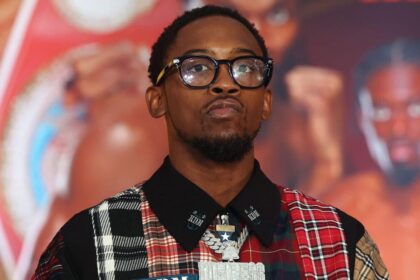
In Crawford’s case, social media challenges from fighters like Jaron “Boots” Ennis and Ryan Garcia keep the question of a return alive. While these interactions stir interest and could provide lucrative matchups, the risk to Crawford’s pristine legacy looms large. Evaluating his career in the calm of retirement brings a clearer perspective. Despite his brilliance, some experts argue that Crawford’s competition didn’t reach the legendary caliber of past greats like Sugar Ray Leonard or Tommy Hearns, noting that his top opponents before Canelo were limited—Shawn Porter being one of the best on his record. This comparison emphasizes that true legacies are often shaped by the era and quality of opposition faced.
For many fighters, the silence of retirement prompts a yearning to re-enter the ring, driven by the craving for the crowd’s energy and the sense of purpose boxing provides. Crawford’s occasional social media activity might partly be a way to fill this void. Ultimately, though, as time moves on and a comeback becomes less viable, retired fighters shift their focus from chasing glory to simply being remembered for their achievements.
Fan Take: For fight fans, Crawford’s potential return is tantalizing because he could reignite rivalries and elevate current divisions. However, his retirement also highlights a critical phase in boxing where legends confront their legacies, reminding us that the sport is as much about timing and impact as it is about skill inside the ring.
Source: sports.yahoo.com