

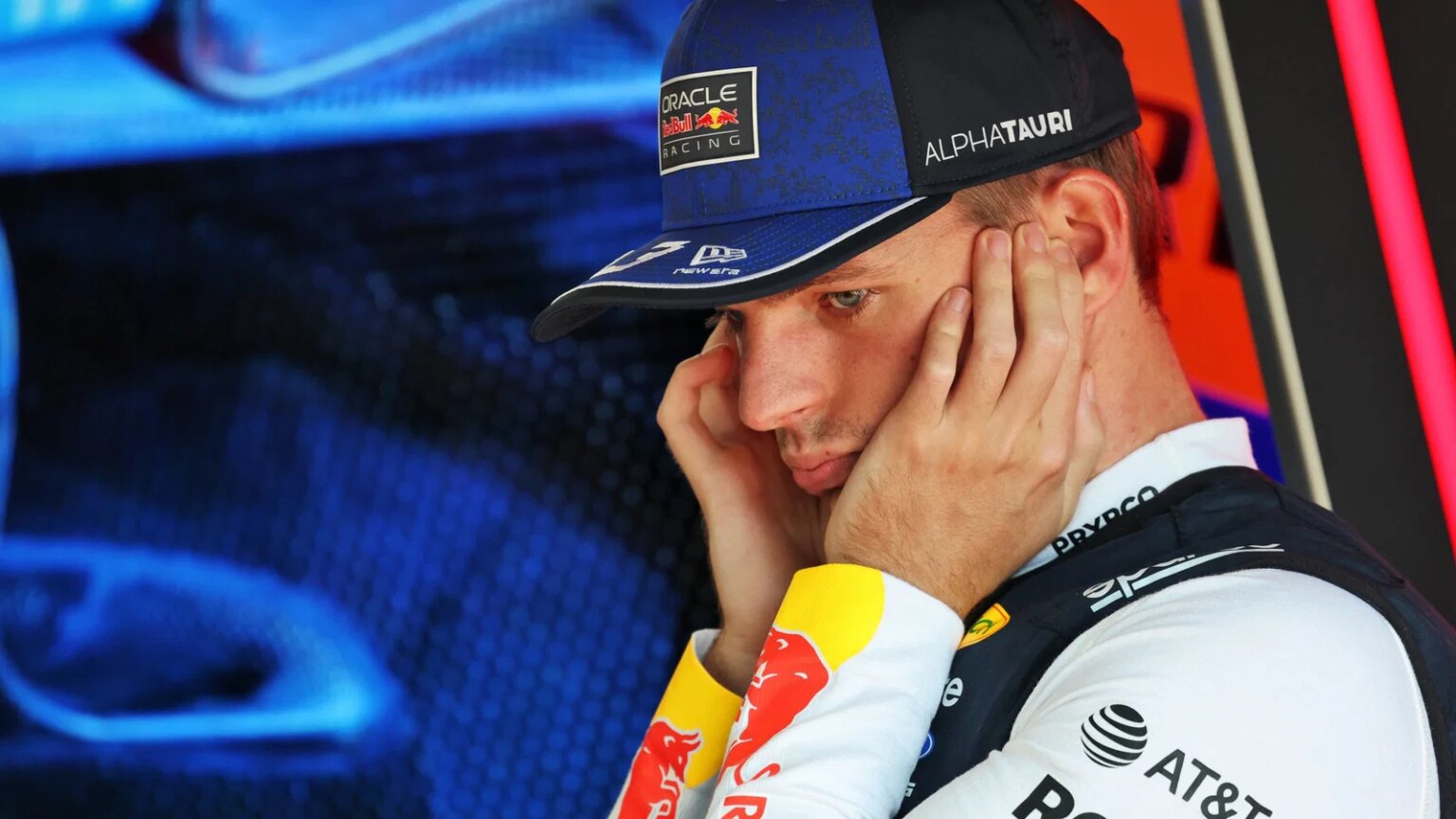
Max Verstappen has offered an intriguing perspective on how he would enhance Formula 1 if he were in charge. The four-time world champion has been a vocal critic of the 2026 regulation changes, particularly expressing dissatisfaction with the current engine rules to the point of threatening to quit the sport.
Although Verstappen’s criticisms have tempered somewhat following F1’s decision to implement a phased transition from an almost equal 50-50 power split to a 60-40 ratio favoring the internal combustion engine by 2028, he remains unhappy with driving the 2026 cars. He feels the new engine regulations have diminished the excitement of qualifying and reduced the payoff for pushing hard through fast corners, resulting in an “unnatural” style of driving.
On the P1 with Matt and Tommy podcast, Verstappen articulated his frustration by stating the current cars “don’t suit anything, you just make the best of it.” He explained that in certain corners, drivers either maintain a flat-out approach or cautiously modulate the throttle—both of which feel limiting. He noted that the art of braking late and applying throttle early, vital traits of top drivers, has been replaced by a more uniform and less strategic technique focused on gradually reaching full throttle. This has narrowed qualifying margins as high-speed corners no longer feel truly fast because it’s often better to lift early and accelerate later on straights.
Verstappen also addressed broader changes he desires, advocating for a return to simpler race weekends. With the F1 calendar expanding and increased media and sponsor demands, he longs for a focus back on racing. “F1 has changed a lot, with more races and a bit of a circus atmosphere in the paddock,” he said, “yet driving time compared to being at the track hasn’t increased much.”
His ideal weekend would involve arriving Saturday morning to run a single practice session, followed by qualifying and the race on Sunday. While he understands the commercial reasons behind exciting Friday and Saturday sessions, he finds three practice runs excessive and suggests cutting at least one.
Verstappen voiced clear frustration with the sprint race format, which will expand from six to ten events next season. Winning the sprint and thus gaining pole doesn’t guarantee main race success, leaving drivers feeling disappointed if they don’t win the race itself. He noted that sprints can prematurely reveal the competitive picture ahead of the race, detracting from the uncertainty and strategy surrounding tire management and race execution. Still, he acknowledged that sprints offer valuable information for race preparation and allow teams to adjust after Saturday.
However, Verstappen’s strongest complaint centers on the engine. When asked what he would change if given the chance, he immediately replied: “Change the engine back to a V8.” He argues a genuine V8 engine would improve drivability, reduce weight, and make racing more enjoyable. He’s not a fan of artificial aids like DRS or the active aero system introduced in 2026 and would prefer a simpler but effective “push-to-pass” system powered by a small battery, reminiscent of the previous KERS setup. This, he believes, would enable more authentic overtaking—races won by skillful maneuvers rather than electronic assistance.
Verstappen envisions a car powered by a naturally aspirated V8 or V10, complemented by a modest electric boost for overtaking, a concept that aligns with rumored plans for the 2030 engine regulations, which may feature a 3.0-liter V8 turbo and a push-to-pass mode.
Fan Take: Verstappen’s critiques highlight a crucial tension in Formula 1 between technological innovation and preserving the raw, competitive spirit that fans cherish. If the sport embraces his vision, particularly with engine regulations that prioritize driver skill and authentic racing, it could restore some of the excitement and challenge that have been lost, reigniting passion among long-time enthusiasts and new viewers alike.
Source: www.crash.net