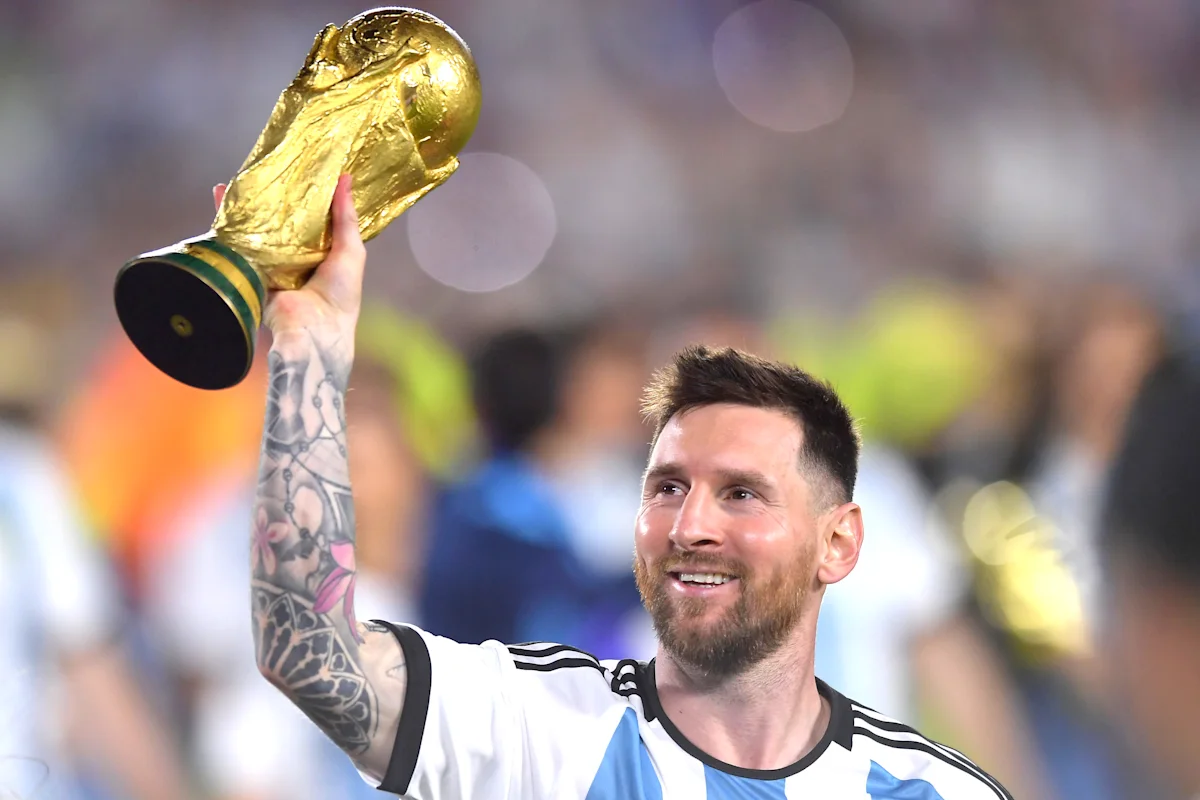
After over 20 years, Lionel Messi is concluding his illustrious international journey. On Monday, the captain of Argentina revealed his retirement from international football, reflecting on his time with La Albiceleste as an “incredible experience.”
Messi’s two-decade international career is nothing short of legendary. He retires with a World Cup title, two Copa América championships, two World Cup Golden Balls, and the second-highest number of World Cup goals (21) in history, among many other accolades. Even in the twilight of his career, Messi continually defied age, shining brightly and helping lead a powerful Argentine team.
With such a long and decorated career, it’s challenging to condense Messi’s experiences into a few key moments, but here are some highlights.
2006: Messi makes his World Cup debut
One year after joining the senior national team, Messi headed to his first World Cup in 2006 as a teenager with long hair, already a rising star.
He made his debut in the group stage against Serbia, scoring just 13 minutes after coming on as a substitute.
Although that goal was his only contribution in three matches during that World Cup, it marked the beginning of his remarkable journey.
2008: Messi leads Argentina to an Olympic gold medal
Messi secured his first significant international title at the 2008 Beijing Olympics, where he joined the Argentina U-23 team to win back-to-back Olympic gold medals.
Initially, Barcelona had refused to release the 21-year-old for the event, but the club’s then-new coach, Pep Guardiola, eventually permitted his participation.
With Messi’s efforts, Argentina went undefeated throughout the tournament, winning all six matches. He played in five games, netting two goals and claiming his first major international trophy.

Lionel Messi celebrating his Olympic gold medal just three years into his international career.
(JEWEL SAMAD via Getty Images)
2014: Messi earns his first Golden Ball at the World Cup
After Argentina’s quarterfinal exit in the 2010 World Cup, hopes were high for a resurgence in the 2014 tournament in Brazil. Argentina performed splendidly, winning five consecutive matches to secure a spot in the final.
Messi shone during the group stage, scoring four goals in three games. While his performance waned in the knockout phase, Argentina’s overall strength allowed them to reach the final—their best finish in 24 years.
Though Argentina lost 1-0 to Germany, Messi received the Golden Ball for being the tournament’s best player, despite coming so close to winning the coveted trophy himself.

Lionel Messi and Germany’s Manuel Neuer after the 2014 World Cup final, where Messi received the Golden Ball trophy.
(Clive Rose via Getty Images)
2022: Messi finally wins it all
After countless near misses, Argentina captured the World Cup in 2022, defeating France in a dramatic penalty shootout. This victory gave Argentina its third World Cup title and its first in 36 years.
Despite doubts about his abilities and a surprising initial loss to Saudi Arabia, Messi rose to the occasion in 2022, scoring seven goals, providing three assists, and showcasing exceptional leadership as Argentina fought their way to the final.
In a nail-biting final, where French star Kylian Mbappé posed a constant threat, Messi and his team ultimately triumphed, allowing him to finally lift the trophy that had eluded him for so long.
2026: Messi leaves it all on the line
After Argentina’s World Cup win in 2022, fans speculated whether it would be Messi’s last appearance in a global tournament. However, he returned to captain La Albiceleste in one final World Cup effort.
Turning 39 during the tournament, Messi pushed himself to the limit, scoring a total of eight goals after starting with a historic hat trick. He briefly held the all-time World Cup lead with 18 goals until it was reclaimed by Mbappé.
During Argentina’s nail-biting knockout matches, Messi often played the role of hero, including a critical equalizer against Egypt, which helped his team secure a win in stoppage time.
Despite their tenacity, Argentina ultimately fell to Spain in the final. Following the loss, Messi was visibly emotional, leading many to believe this could be his last outing in the iconic sky blue jersey. In a poignant message the next day, Messi expressed that it might “take time for this wound to heal.” The recent passing of his father further weighed on him, influencing his reflections on his international career. Yet, his tremendous legacy in the sport remains unquestionable.
This news is significant for soccer fans because it marks the end of an era defined by one of the sport’s greatest players. Messi’s retirement compounds the loss of other legends, urging fans to cherish the legacies of such icons while recognizing the impact they’ve had on football worldwide.
Source: sports.yahoo.com