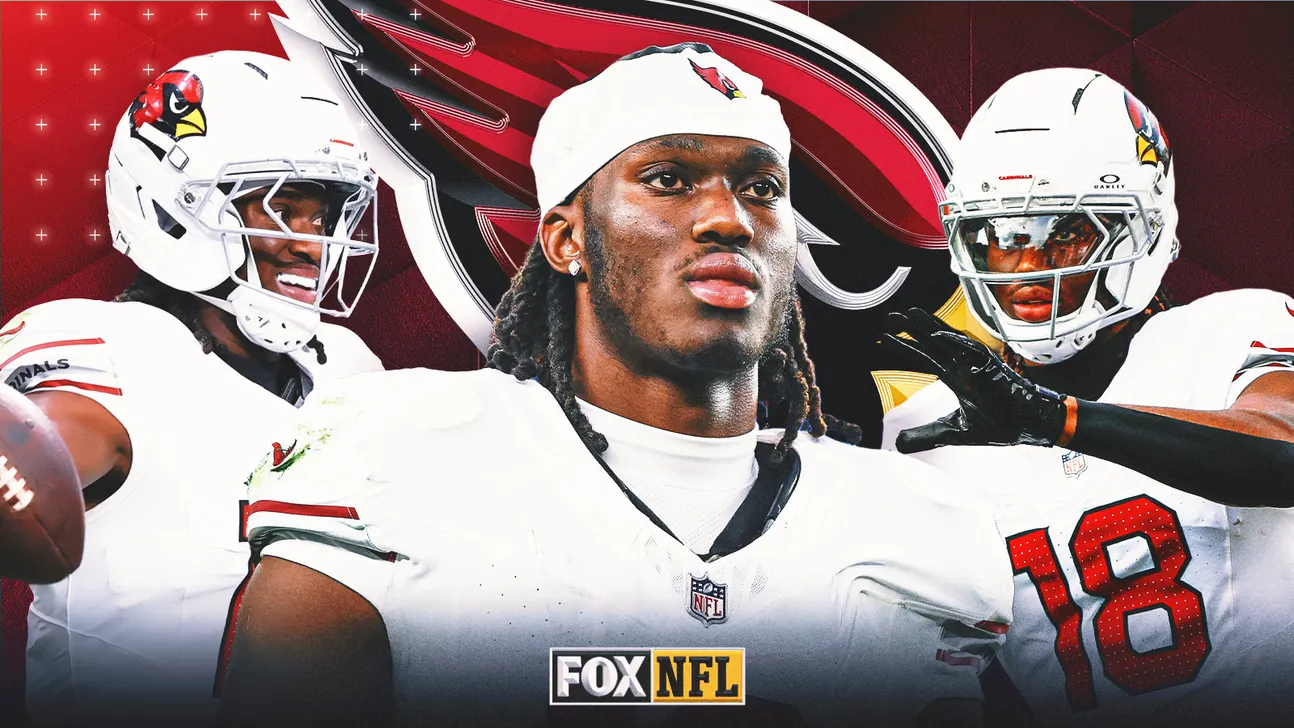
Marvin Harrison Jr., picked to be the Cardinals’ next great receiver in the mold of Larry Fitzgerald, now finds himself at a turning point in Arizona. Through three games this season he has only four catches on nine targets and is a distant non-factor in the offense, sitting sixth on the team in receptions — even trailing running back Tyler Allgeier.
Former NFL receiver T.J. Houshmandzadeh believes Harrison should pursue a change of scenery. He told me a fresh start would benefit Harrison because, in his view, the Cardinals no longer treat him like the generational talent they drafted. Houshmandzadeh argued that if Arizona truly valued Harrison, the coaching staff would be getting him more involved with clear targets and opportunities.
Harrison is the fifth-most targeted player on the roster but has just 73 yards from his four catches so far. Tight end Trey McBride leads Arizona with 26 catches, followed by Michael Wilson (18), Kendrick Bourne (12), rookie running back Jeremiyah Love (10) and then Allgeier. During the offseason the team locked up McBride (four years, $76 million) and Wilson (three years, $75 million), and Love remains on a costly rookie deal, all of which complicates Harrison’s path to consistent targets.
The receiver is in Year 3 of a four-year rookie contract worth $35.4 million and is scheduled to make about $4 million this season. His struggles have been notable enough that an ESPN report said league executives are quietly wondering if Arizona would consider trading him before the Nov. 10 deadline.
First-year head coach Mike LaFleur, who wasn’t involved when Harrison was drafted, hasn’t shown a clear commitment to making Harrison a primary option. LaFleur has described the offense as one with finite snaps — around 60 to 65 plays per game — and emphasized roles for players like McBride and Bourne, plus the need to run the ball, which limits how many touches Harrison can realistically receive.
There have been social-media clips circulating that suggest Harrison hasn’t always run routes with full effort, though he’s been careful with his public comments. Three of his four catches this season came in Week 3 against the 49ers. Harrison himself said he’s focused on making the most of the opportunities he gets and wants to build on recent progress.
Looking at his early career numbers, Harrison’s rookie year produced 62 catches for 885 yards and eight touchdowns on 116 targets. He followed that with 41 catches for 608 yards and four touchdowns in a 12-game 2025 campaign that was shortened by appendicitis, a concussion and foot/heel injuries. His career totals stand at 107 receptions for 1,566 yards and 12 TDs, with 10 drops — fewer than some of his 2024 first-round peers, who have higher drop counts.
Not everyone in the league is convinced Harrison will blossom elsewhere. A league source described him as average to slightly above-average, saying if Harrison had been the 104th pick rather than No. 4, expectations would be different — and suggested his production might look similar on another team unless issues with maturity, motivation or coaching are addressed.
Houshmandzadeh, however, notes that Harrison landed in a tough situation: Arizona has been a struggling franchise since he arrived and inconsistent quarterback play has not helped. He believes several clubs — including the Raiders, Bills, Colts and Texans — could use Harrison’s skill set, and pointed to a potential reunion with C.J. Stroud in Houston as an example of an opportunity where targets would be more plentiful.
His advice to Harrison is twofold: stop jogging routes and recommit to full-speed effort on every play to force separation, even if the ball doesn’t immediately come your way. That, Houshmandzadeh says, will rebuild Harrison’s confidence and show other teams that he can be a reliable playmaker. He remembers Harrison’s dominance at Ohio State and thinks a regained mindset and confidence could revive that level of performance.
Fan Take: This matters because a former top pick struggling in Year 3 highlights how quickly expectations can shift and how much context — coaching, QB play, team construction — affects young receivers. If Harrison gets traded and succeeds, it could reinforce the importance of fit over draft pedigree; if he continues to struggle, it may prompt teams to be more cautious investing high picks in receivers without clear surrounding support.
Source: www.foxsports.com