
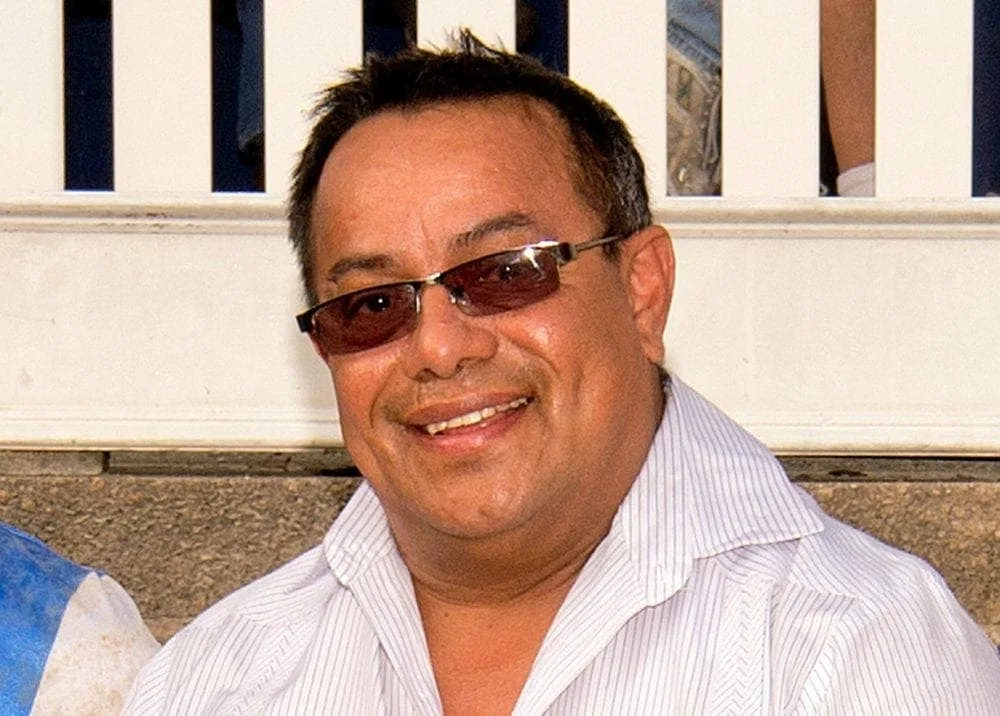
Trainer Jose Corrales has been handed a two-year suspension and fined $10,000 after a horse under his care tested positive for the banned stimulant nikethamide following a win at Laurel Park in Maryland on February 20. Corrales, who has trained 727 winners and earned over $20 million in purses during his career, denies administering the drug to Curlene’s Spirit and maintained at an arbitration hearing on September 22 that he was unaware of how the substance entered the filly’s system.
Corrales, 66, expressed his devastation to the Daily Racing Form, stating that losing everything in a single day after 52 years in the industry was heartbreaking. He also revealed he was notified of the ruling on a Friday evening, which forced him to make sudden arrangements for his stable of more than 30 horses, resulting in the scratching of all three entries he had at Laurel over the weekend.
Nikethamide is a stimulant formerly used to stimulate breathing in humans but is now banned in horse racing by HISA at all times. During the arbitration, Corrales and his wife Jovlyn Castro, who manages his barn, testified that their barn at Laurel is left unlocked for safety, allowing anyone on the grounds to access it. They suggested contamination or interference by a third party could have caused the positive result.
Following the positive test, HIWU inspected the barn and tested Corrales’ feed and supplements but found no banned substances. Corrales and Castro have since installed cameras to secure the area. Arbitrator John Wendt noted that both testified with sincerity, but under HISA’s strict liability rules, the trainer is held responsible regardless of intent, and Corrales needed to provide evidence explaining how the drug entered the horse’s system to reduce his penalty.
Despite Corrales’s arguments of contamination or sabotage and his reasoning that using the substance to win a relatively low-stakes race was illogical, he could not pinpoint any product, person, or likely source of the drug. Citing a prior Federal Trade Commission decision, Wendt emphasized that speculation does not amount to proof.
Wendt stated, “Mr. Corrales has advanced the theory of ‘I didn’t do it,’ not that the substance came to be in the horse’s Sample through some known or likely route.” With no such explanation offered, Wendt found no grounds to reduce the standard two-year ban. He acknowledged Corrales’s disagreement with the penalty but confirmed the rules mandate the suspension regardless of intent.
HIWU had requested a $25,000 fine in addition to the suspension and coverage of legal costs, but Wendt imposed a reduced fine of $10,000 and declined to award HIWU its legal fees. The arbitrator noted that Corrales had litigated in good faith, presenting reasonable arguments in a regulatory area that is still evolving.
Corrales has indicated plans to appeal the ruling, though no appeal had been recorded as of the article’s publication. Curlene’s Spirit was disqualified from the February 20 win, and the prize money was forfeited. The filly was claimed from Corrales in July and has already served a 60-day ineligibility period, along with passing a negative test upon re-entry.
Fan Take: This ruling highlights the stringent nature of anti-doping regulations in horse racing, emphasizing the sport’s commitment to fairness and integrity, even when intent is unclear. For fans, it serves as a reminder that trainers must maintain rigorous control over their stables, influencing trust and accountability moving forward in the industry.
Source: sports.yahoo.com