

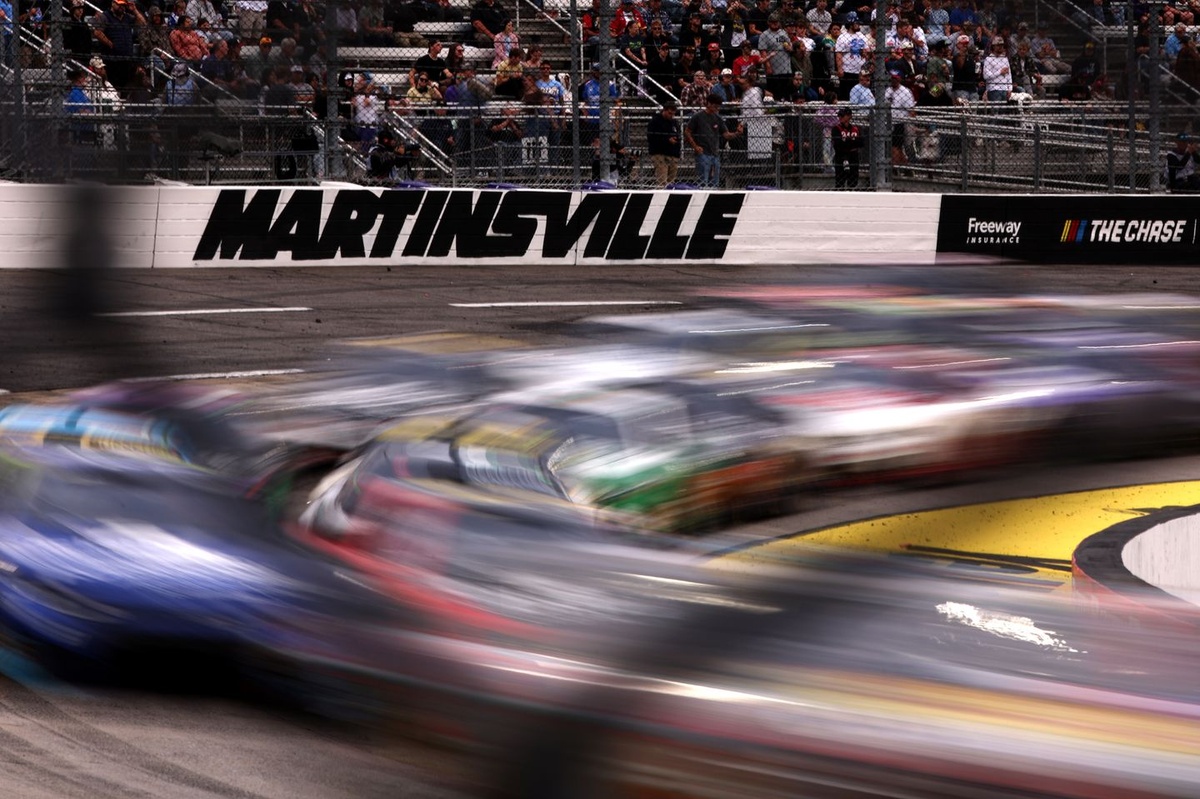
Over the last four years, significant strides have been made with the NextGen car, but it still struggles, particularly on short tracks like Martinsville Speedway. NASCAR continues to adjust elements such as Goodyear tire compounds, aerodynamics, and engine power in an effort to replicate the racing style seen with the Gen6 car or even the O’Reilly Series package.
This five-year-old NextGen car is notably different from its predecessors. Its design features, including a sealed underbody, wider tires, and rear diffuser, make it resemble an IndyCar covered with a stock car body rather than a traditional stock car. This has altered drivers’ approaches to tracks like Martinsville, especially as they now shift gears frequently at each end of the track during nearly every lap.
Despite these challenges, Chase Elliott feels the car is improving. He noted that tire wear has become more impactful, especially during recent races, where fresh tires clearly benefited those advancing through the field, while others struggled. This was demonstrated in the recent Martinsville race, where long green-flag runs caused dramatic tire degradation and only seven drivers finished on the lead lap.
Elliott also suggested that without stages, tire wear might become even more pronounced, potentially leading to more strategic pit stops and exciting race dynamics, though he doubts NASCAR will remove stages. The longer final stage in the recent race allowed for varied strategies and made tire management a key factor in gaining positions.
Many fans reminisce about the old Martinsville races characterized by bump-and-run moves, where drivers aggressively slid into corners and battled door-to-door. Elliott says that with the NextGen car, this style of racing is nearly impossible—the cars are too sensitive, and attempting to nudge a competitor often ruins the corner for the aggressor rather than producing a clean pass.
Denny Hamlin highlighted that the NextGen car has improved significantly on short tracks compared to 2022, largely thanks to Goodyear’s tire advancements. However, he emphasized that the car’s design promotes parity, making it harder for drivers to create the small speed advantages needed to pass cleanly at tracks like Martinsville. Hamlin explained that to overtake, a driver typically needs to be about two-tenths of a second faster per lap, which is difficult given the tight competition and uniformity of the cars.
Hamlin and others also expressed a desire for the car’s setup to evolve toward a lower front end with a higher rear, which could improve handling, though he doesn’t expect drastic improvements. Daniel Suarez and Hamlin both advocated for less frequent shifting, which would require a revamp of the car’s gearing system.
Chase Briscoe, who experienced the older model for a limited time, misses the days of heavy tire sliding and spinning, aspects he feels are mostly gone with the NextGen car. He notes that racing at Martinsville has changed dramatically and there is still a long way to go before the NextGen car can offer the same excitement.
Fan Take: The ongoing evolution of the NextGen car is crucial because it directly affects how thrilling short-track races can be, a staple of NASCAR’s fan appeal. As teams and NASCAR work toward improving tire wear and car setups, it could lead to closer racing and more memorable moments, which are vital for keeping the sport vibrant and engaging for fans old and new.
Source: www.motorsport.com