


Ryan O’Hanlon
Multiple Authors
This time of year, there’s a change in the environment. The air turns brisk, shadows grow colder, days get shorter, and vibrant autumn colors begin to appear. Sweaters come out of storage, and pumpkins start showing up in unexpected places.
Everything feels like it’s gearing up for the inevitable: the moment when Manchester United decides to part ways with their manager, each time believing the next hire will be the key to turning things around.
Ruben Amorim was let go last January, Erik ten Hag right before Halloween two years back, Ole Gunnar Solskjaer just days before Thanksgiving, and Jose Mourinho a week ahead of Christmas.
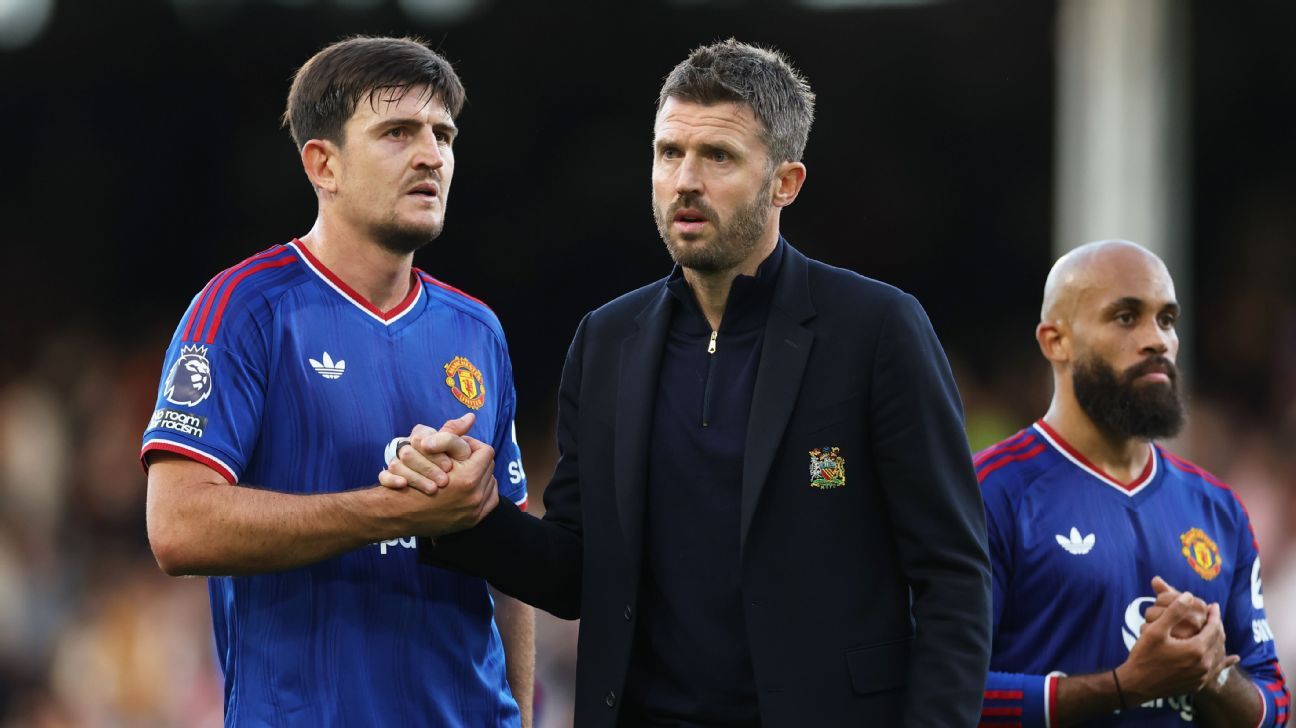
As we enter another coaching crisis period, it seems Michael Carrick is the next candidate to be dismissed.
Currently, Manchester United is barely out of the relegation zone, depending on goal differential. Historically, their recent performance against AS Roma in the Champions League will likely prove inconsequential. Carrick appeared visibly distressed in the wake of each match before their recent win.
This marks the 14th consecutive season since Manchester United last claimed the Premier League title. The new manager will become the ninth individual tasked with achieving what no one since Sir Alex Ferguson has accomplished: maintaining consistent expectations at one of the wealthiest sports clubs in the world over multiple seasons.
However, given the string of failed coaches since Ferguson’s departure, it raises the question: Was it even possible for anyone to succeed at Manchester United?
The Value of a Great Manager
Last season, Arsenal topped the Premier League with an impressive 85 points.
If we imagined a scenario where substitutes didn’t exist, theoretically, each of Arsenal’s 11 players contributed equally to that success—approximately 8 points each (7.7 to be precise).
But removing a star player like Bukayo Saka wouldn’t leave the team playing a man down; they’d simply bring in another player who could also help secure victories.
Now, looking at relegation concerns, West Ham went down with 39 points—meaning each of their players contributed just over 3.5 points across the season. This suggests that, on average, Arsenal players were worth about 5 points more than those on relegated squads.
Of course, this is a simplified view: players vary in skill and positional importance, and nearly no one plays every minute. Goalkeeper David Raya logged 97.3% of league minutes last season, and Declan Rice followed with 90.5%.
This framework still offers a useful reference. The elite players on top clubs likely provide about 7 points more than an average player from a relegated team, and the truly exceptional talents might reach a 10-point advantage.
But where does the manager fit into this? Instead of revisiting the age-old debate of whether managers matter, we can rely on the perspective of Ian Graham, a former director of research for Liverpool, in his book “How to Win the Premier League”: he believes a manager offers value comparable to that of a strong player, aligning with the salaries of top managers and players.
So, who would have been the best managerial hire for Manchester United in the past 14 seasons?
Many football analysts would point to either Pep Guardiola or Jurgen Klopp. This is further supported by data.
A 2025 study from the Sloan Sports Analytics conference assessed team performances from 2017 to 2024 in Europe’s top leagues. It showed that Klopp and Guardiola significantly outperformed their peers.
Given the numerous allegations against Manchester City under Guardiola, it seems more sensible to lean towards Klopp. While Guardiola has undeniably shaped modern football, skepticism surrounds the context of his tenure at City. The financial benefits under his leadership can’t solely be credited to his strategic genius.
Klopp, on the other hand, transformed two financially modest clubs into leading teams globally and maintained their high standards over several seasons. Both Borussia Dortmund and Liverpool appeared to decline after his departures.
A manager’s role is to elevate their team beyond the limitations of the club’s financial capacity while continually driving that progression as the squad evolves. In this respect, Klopp has outperformed all others.
Would the Top Manager Save Manchester United?
Imagining if Manchester United had managed to hire Jurgen Klopp in 2013 instead of David Moyes leads to countless possible scenarios—impacting everything from the German football landscape to Salah’s career trajectory.
2:36
Who will replace Carrick if he’s sacked as Manchester United head coach?
While we recognize that Liverpool benefited from Klopp’s leadership, he also thrived in an environment that allowed for strategic decisions, such as signing Mohamed Salah over Julian Brandt.
It wasn’t just Klopp who turned Liverpool into a top team; it was the successful partnership between him and the club’s forward-thinking management.
Similarly, Borussia Dortmund provided Klopp with talented young players who fit his high-press strategy, allowing him to build stars like Robert Lewandowski and Marco Reus.
When examining Manchester United, the reality is troubling. The club’s efforts to build a competitive team have been fundamentally flawed. Since 2013, they have only finished equal or higher in the league table relative to their revenue once—last season.
While it’s tempting to believe that appointing the right manager is the sole solution, that oversimplifies the situation. A club constantly firing their coaches cannot possibly be flawlessly executing every other aspect of operations.
The struggle to find a permanent, successful manager reflects deeper systemic issues within the club. For over a decade, they’ve mismanaged their resources, indicating serious flaws in how Manchester United builds its soccer teams.
While having Klopp at the helm would certainly not resolve all of United’s issues, he would have had to navigate a dysfunctional environment—similar to being assigned Brandt instead of Salah repeatedly.
In a hypothetical best-case scenario, even if we assume Klopp is akin to a generational superstar manager, and the club’s hiring choices were consistently poor, it’s essential to remember that such extreme assumptions might not align with reality.
However, if we were to assume Klopp could guarantee an additional 10 points per season over the last decade, the results would be notable:
If Klopp had led the team, Manchester United would have averaged 76 points a season, compared to the actual 66, and their finishing position would have shifted from an average of 5.3 to 3.8.
Thus, having the world’s top manager over the last decade would likely have improved Manchester United’s competitive standing significantly. They might have qualified for the top four in 10 seasons instead of 6, possibly even achieving a deeper Champions League run, especially considering their strong performance from 2008 to 2011 when they reached three finals.
Yet, even with 13 years of unparalleled managerial excellence, Manchester United would still find itself without a Premier League title since Sir Alex Ferguson’s retirement.
As soccer fans, this situation with Manchester United highlights the challenges faced by historic clubs when they fail to adapt their strategies. Watching a team with such resources struggle underlines the importance of both management and structural support in achieving lasting success in football.
Source: www.espn.com
