<p><em><strong>With Antoine Semenyo moving to Manchester City, Liverpool faces a critical question: did they forgo a crucial chance to enhance their future attack, or is it wiser to exercise patience in the post-Salah phase?</strong></em></p>Semenyo’s Transition: From Liverpool Admiration to Manchester City Support
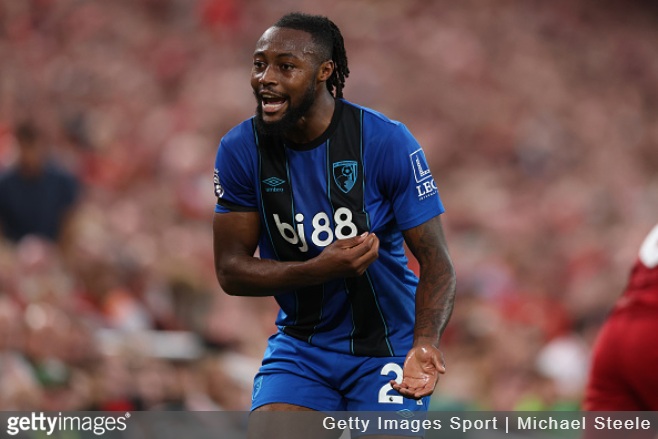
As the January 2026 transfer window nears, a captivating saga is reaching its conclusion. Bournemouth’s dynamic winger, Antoine Semenyo, is preparing to join Manchester City. With Liverpool initially linked to him earlier this season, one must ponder whether they let slip a significant opportunity to boost their attack or made a prudent decision.
The current Premier League champions reportedly reached out in November to discuss a possible transfer but have remained quiet since, allowing other clubs to capitalize in the winter market.
Semenyo’s ascent is impressive. The 25-year-old has emerged as one of the Premier League’s most formidable wide players. This season’s statistics—eight goals and three assists per 90 minutes, with a goal involvement rate of 0.69—highlight his influence. His ability to thrive on either wing, paired with his pace, strength, and directness, makes him a perfect fit for intense systems.
Moreover, a £65m release clause is accessible for the initial 10 days of January, presenting a rare opportunity to acquire a proven talent without exceeding nine figures.
Sources indicate he would have eagerly accepted a move to Liverpool if they had pursued him. However, with Liverpool’s inaction, Semenyo opted for Manchester City over other contenders, including Manchester United, Chelsea, and Tottenham Hotspur.
Rationale Behind Liverpool’s Interest
Liverpool’s early interest was logical. Mohamed Salah, a club icon for nearly a decade, is no longer the dominant player he once was. After a record-breaking 2024-25 season, his performance saw a significant decline, with goals per 90 dropping from 0.80 to 0.29, while his expected goals per 90 halved and touches in the opposition box fell sharply.
At 33, Salah’s decline is expected and has been worsened by tactical shifts under manager Arne Slott and a public dispute where he accused the club of not supporting him. Whether he leaves for Saudi Arabia in 2026 or extends his contract to 2027, Liverpool must strategize for life after Salah in the near future.
Semenyo seemed to be a seamless transition. With proven capability in the Premier League, his style resonates with Salah’s impactful play, and he can be acquired for a fee that appears reasonable in today’s inflated market.
Reasons Behind Liverpool’s Withdrawal
So why did Liverpool decide against pursuing him? Financial caution may be one factor. The club invested heavily in players such as Alexander Isak, Florian Wirtz, and Hugo Ekitike last summer, which might have made them hesitant to spend significantly again mid-season, especially given Financial Fair Play (FFP) considerations.
Additionally, there’s the aspect of squad development. Liverpool aims to nurture the growth of 17-year-old winger Rio Ngmoha, who is already breaking into the first team. Bringing in a high-profile player could hinder his progress and disrupt long-term plans.
Strategically, Liverpool’s management reportedly sees Semenyo as a short-term solution rather than a transformative figure. Their focus is on securing young talents with higher potential, such as Yann Diomande from RB Leipzig, who is viewed as Salah’s future successor. Ultimately, while Semenyo would have been eager to join, his choice to go to Manchester City was logical, given the attractive prospects of trophies and Pep Guardiola’s progressive vision.
Potential for Regret
However, stepping away poses risks. Liverpool’s attacking lineup is showing signs of aging. With Salah’s diminishing form, Isak sidelined for a lengthy period, and Kodi Gakpo and Wirtz facing inconsistency, the urgency for fresh talent is palpable.
In this scenario, Semenyo could have made an immediate impact and added tactical versatility. His ability to penetrate defenses would have complemented their possession-based strategy and supplied the much-needed threat that’s currently lacking.
Furthermore, a £65m price tag for an accomplished Premier League forward appears to be a bargain compared to international targets that often demand fees exceeding €100m.
On the flip side, exercising restraint could yield benefits in the long run. Liverpool’s reorganization is already in motion, with Isak, Wirtz, and Ekitike serving as the foundation of their future attack. A significant investment in Semenyo, who turns 26 next year, could hinder their pursuit of elite young prospects.
Slott’s approach emphasizes gradual development rather than reactive acquisition. If Liverpool genuinely believes signing Diomande or Rodrygo offers greater potential, postponing until summer aligns with their long-term strategy, albeit at a possibly higher cost.
Conclusion: A Calculated Risk
So, did Liverpool forfeit their opportunity? Perhaps, if viewed strictly through the lens of immediate gain. Semenyo would have bolstered their title aspirations and eased the transition following Salah’s decline. However, when assessed in terms of succession planning, Liverpool’s choice reflects a disciplined strategy rather than neglect.
The real test lies in execution. If Salah departs and Liverpool fails to sign a world-class replacement before summer, this decision could appear misguided. If they manage to acquire generational talent, forgoing Semenyo will be seen as a wise choice.
Meanwhile, Manchester City seems poised to enhance Guardiola’s collection of talent. Liverpool, conversely, must hope that their patience pays off, as the dividing line between caution and stagnation in modern football can be perilously thin.
Fan Take: This development is crucial for soccer fans, as it highlights the strategic maneuvering among top clubs in shaping their futures. Liverpool’s gamble, either in restraint or risk, could set the stage for how they compete in the coming seasons, significantly impacting the competitive landscape of the Premier League.