

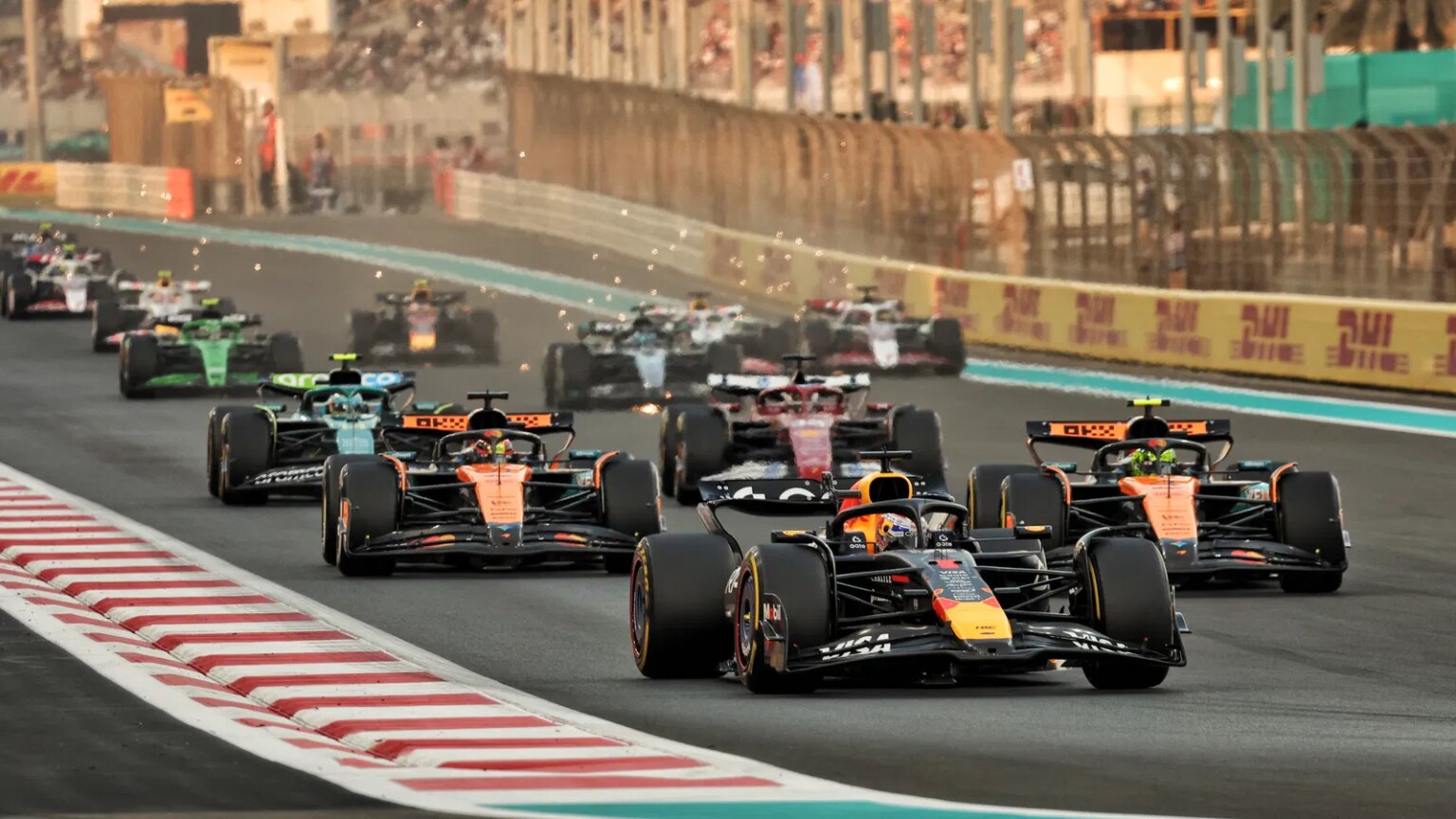
As a new year approaches, Formula 1 is gearing up for its most significant rule overhaul ever, featuring major changes to chassis and power unit regulations that could dramatically alter the competitive landscape, alongside welcoming an 11th team to the grid.
Lando Norris will start the 2026 season as the defending world champion, having overcome early career challenges and pressure to deliver when it mattered most in 2025. Despite some doubts, Norris demonstrated resilience and adaptability, earning respect for maximizing McLaren’s dominant MCL39. His confidence as a reigning champ suggests we’ll see an even stronger version of Norris in 2026, provided McLaren continues to offer competitive machinery.
One standout topic in 2025 has been McLaren’s ‘Papaya Rule’—a set of conduct guidelines promoting fair and aggressive racing between teammates Norris and Oscar Piastri. Designed to prevent intra-team clashes, the rule governed equal treatment but created tension as the title fight heated up, especially with Max Verstappen’s emergence as a rival. McLaren plans to maintain this policy of fairness into 2026, but whether Norris and Piastri can coexist harmoniously remains uncertain.
Mercedes is widely viewed as an early favorite for 2026, reminiscent of their dominance beginning in 2014 with regulatory changes. Their powerful engines and experience position them ahead of rivals like Ferrari—who had a disappointing 2025 season—and Red Bull, which will debut its own engine. Aston Martin with Honda’s backing and Adrian Newey’s design expertise could also become a dark horse.
Max Verstappen’s future will dominate headlines, as he confirmed his stay at Red Bull through 2026 despite interest from Mercedes and Aston Martin. His performance in 2026 will be pivotal not only for his own career but for shaping the driver market in 2027. Meanwhile, Isak Hajar has the challenging task of overcoming the so-called ‘Red Bull curse’ on teammates by proving his worth in a fresh era of regulations.
Ferrari faces questions about their competitiveness after a tough 2025, with Lewis Hamilton struggling to perform and contract decisions lingering. Hamilton’s adaptation to Ferrari has been rocky, but 2026’s car changes might suit his style better, though nothing is guaranteed.
Aston Martin is generating excitement with its new Honda-powered AMR26 designed by Adrian Newey. While achieving big wins immediately might be optimistic, improved podium chances in 2026 seem likely as the team builds for future success.
The grid also welcomes Cadillac, entering F1 from scratch with a focus on leveraging their motorsport heritage and experienced drivers Valtteri Bottas and Sergio Perez. Their competitiveness will hinge largely on Ferrari’s engine performance, but a strong midfield presence would mark a successful debut year.
The 2026 regulations aim to make racing closer and more exciting by emphasizing smaller, lighter cars with active aerodynamics to improve overtaking and reduce dirty air. Drivers will face strategic challenges managing new power and energy systems, adding fresh dynamics to the sport’s wheel-to-wheel battles.
Fan Take: This year’s sweeping changes set the stage for a thrilling new chapter in Formula 1, where emerging talents like Norris and Hajar could shake up the established order. Racing fans have every reason to be excited, as closer competition and innovative technology promise more unpredictable and intense racing than ever before.