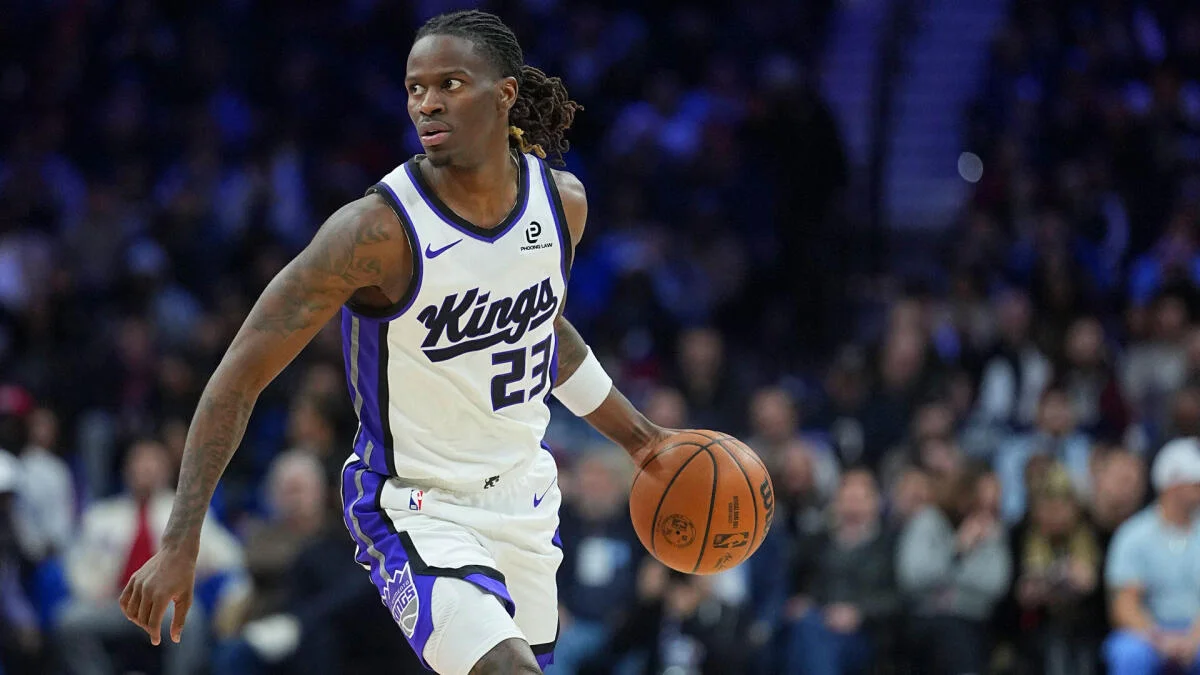
The second major trade of the 2025-26 NBA season has just been completed, marking a significant move for the Cleveland Cavaliers, Sacramento Kings, and Chicago Bulls. Nearly four weeks after the Hawks initiated the trade season by sending Trae Young to Washington, this three-team deal is aimed at bolstering Cleveland’s bench as they push toward the season’s finale. Per ESPN’s Shams Charania, the trade details are:
Cavaliers receive: Dennis Schroder, Keon Ellis
Kings receive: Deandre Hunter
Bulls receive: Dario Šarić, plus two second-round draft picks
Cleveland Cavaliers: Grade A-
Heading into the 2025 offseason, Cleveland identified two key areas that needed improvement: adding defense at the point of attack and finding a reliable backup ball-handler to replace Sixth Man of the Year candidate Ty Jerome, whose salary has become too steep. The Cavaliers had tried to address both by trading Lonzo Ball, who excelled in Chicago last season but struggled this year under Cleveland.
This new deal brings in Dennis Schroder, an inconsistent player with a peculiar pattern of fluctuating between strong and weak performances depending on the team. Over the last four years, Schroder has played for seven different teams, often oscillating between impressive and disappointing showings. Despite his poor current form with Sacramento, his productive stints with teams like the Lakers, Raptors, Nets, and Pistons indicate Cleveland is betting on regaining that high-level version. If Cleveland can harness that Schroder, who defends aggressively against smaller guards and can be a useful scorer, he’ll help greatly as their bench ranks just 23rd in scoring in the NBA. Keon Ellis, known for his stellar defense and sharp shooting, is another key addition. Despite a puzzling reduction in his minutes by the Kings’ coach, Ellis showed promise as one of Sacramento’s best defenders and a reliable three-point shooter.
In exchange, the Cavaliers are sending out Deandre Hunter, whose shooting has dipped this season, and despite his defensive upside, he has yet to reach his potential consistently. Hunter fits Cleveland’s profile for a versatile wing but is no longer in their future plans, especially with emerging young talent and returning players reducing his role. The trade also alleviates Cleveland’s hefty luxury tax burden: Hunter’s nearly $25 million salary this season and next is off the books, and Schroder and Ellis come at a reduced payroll cost. By moving Lonzo Ball and potentially shedding more salary, Cleveland could drop below the second luxury tax apron, all while maintaining a competitive roster without sacrificing future first-round draft picks.
Sacramento Kings: Grade D
While Ellis’s on-court role has been complex, last summer presented an off-court financial dilemma for Sacramento. They exercised a near-minimum team option on Ellis’s contract, which was unusual given the modern trend of letting restricted free agents hit unrestricted free agency to secure better deals or team control. The Kings, despite being one of the rare teams that have frequently landed lottery picks, mismanaged this situation by retaining Ellis cheaply but risking losing him next summer for nothing.
Though Sacramento benefited from some financial flexibility by keeping Ellis’s salary low, by trading Schroder earlier in the season and now Ellis, they have undermined some long-term assets. The team reportedly sought a first-round pick in exchange for Ellis but got none, drawing criticism for poor handling, especially after the fallout from losing Tyrese Haliburton previously.
Sacramento now receives Hunter, a 28-year-old wing with a mixed career but still a serviceable player who could help in the short term. While Murray remains the only standout wing on the Kings, the franchise faces the worst record in the league ahead of a generational draft class and appears ready to rebuild with many players available for trade. Without further moves, their luxury tax payments will rise next season, raising questions about their strategic plan. The trade could be a win if Hunter rebounds to his prior effectiveness, yet it feels like a sideways or even losing move since Hunter is seen as a “bad contract” risk by many.
The Kings narrowly avoid a failing grade since they didn’t give up unprotected draft assets and saved a $4.3 million guaranteed salary on Schroder’s contract for 2027-28. They might also convert promising two-way big man Dylan Caldwell to a full contract. Overall, though, it seems there were easier, more efficient trade options the Kings might have pursued.
Chicago Bulls: Grade C+
The Bulls emerge from this trade relatively unscathed, agreeing to take on Dario Šarić’s $5.4 million salary to help Sacramento while picking up two second-round draft picks in return. This approach is typical for a rebuilding or struggling team aiming to manage salary and acquire future assets, though it won’t transform the Bulls immediately. The move represents a cautious, incremental step rather than a game-changing acquisition.
Interestingly, this trade marks the third straight year of collaboration between the Bulls and Kings in a three-team deal. Past joint trades have seen mixed results—the 2024 sign-and-trade involving DeMar DeRozan, which cost Sacramento a prized unprotected first-round pick, and the 2025 deadline deal for De’Aaron Fox, which didn’t yield significant young talent but did bring Zach LaVine to Chicago. The repeated partnerships between these two franchises, often with complex outcomes, provide a curious subplot to the league’s trade dynamics.
This transaction is now complete. While Chicago avoided any harm, the Bulls-Kings trade nexus continues to baffle fans, raising questions about what unconventional moves might arise involving these franchises in the coming years.
Fan Take:
This blockbuster trade is crucial for basketball fans because it highlights how teams juggle financial constraints, player potential, and long-term planning amid the evolving NBA landscape. Cleveland’s savvy maneuvering to improve bench depth while managing their luxury tax situation shows the increasing complexity of roster building, while Sacramento’s struggles underscore the risks of poor asset management—factors that can influence competitive balance and future superstars in the league.