

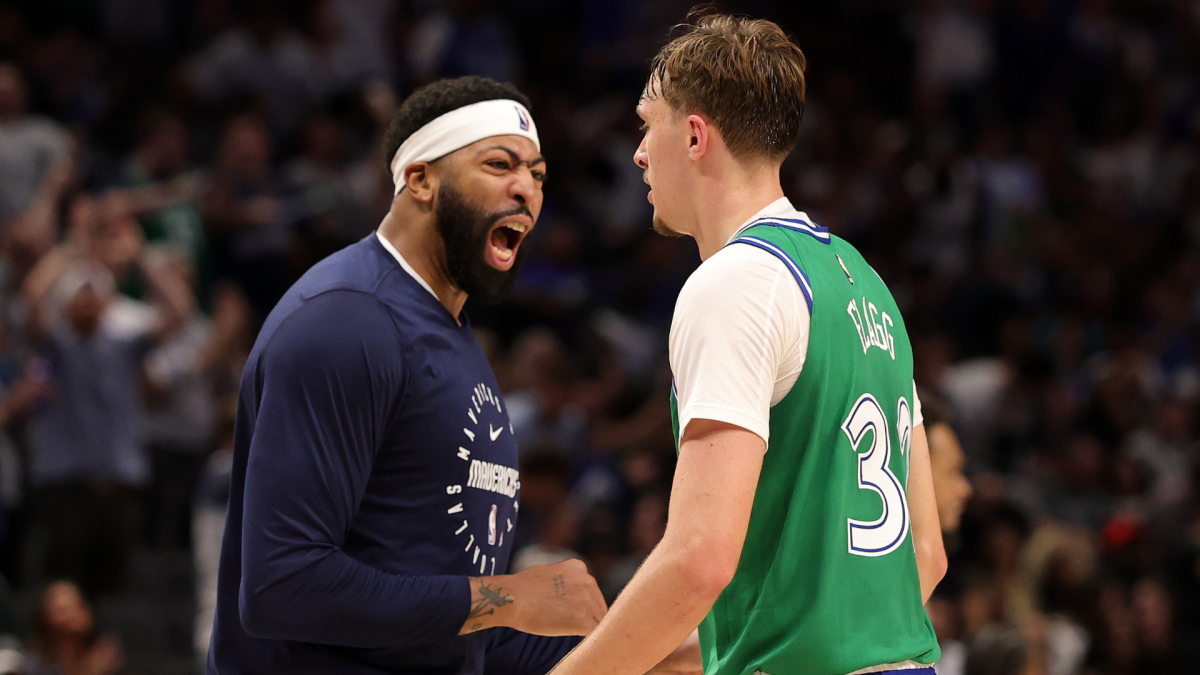
The Dallas Mavericks have officially ended the Anthony Davis chapter. ESPN reports that Dallas has agreed to trade Davis, along with Jaden Hardy, D’Angelo Russell, and Dante Exum, to the Washington Wizards. In return, the Mavericks will receive two first-round draft picks and three second-round picks, including players Khris Middleton, A.J. Johnson, Malachi Branum, and Marvin Bagley III. The Mavericks’ first-round picks carry top-20 protection: the Oklahoma City Thunder holds the 2026 first-round pick, and the Golden State Warriors have the 2030 first-round pick.
This trade comes just over a year after the Mavericks traded Luka Doncic to acquire Davis, marking a complex and debated exchange that leaves both teams with questions to answer. Below are the key winners and losers from this trade.
Biggest Loser: Nico Harrison
Although Harrison is no longer with the Mavericks, he bears much of the blame for this trade. His decision to trade away Luka Doncic, one of the franchise’s all-time greats and a consistent All-NBA First Team player, for Anthony Davis—who only appeared in 29 of 83 games—has been heavily criticized, especially since durability issues were part of the rationale behind letting Doncic go. After sending Davis to Washington, Dallas has ended up with a collection of young prospects and draft picks such as Max Christie, Khris Middleton (a probable addition), A.J. Johnson, Malachi Branum, Marvin Bagley III, and multiple future picks from the Thunder, Lakers, Warriors, Suns, Bulls, and Rockets. Christie shows promise, but overall, this haul hardly compensates for losing Doncic.
Winner: Washington Wizards
The Wizards are having a rough season with one of the league’s worst records, but they have bolstered their roster by acquiring Anthony Davis and Trae Young. While health and performance concerns remain for both, they represent All-Star talent, offering the Wizards a level of skill they haven’t seen in years. These additions give their young core — including players like Alex Sarr, Tre Johnson, and Bilal Koulibaly — a more competitive environment and hope for building a stronger future. Even if Davis and Young don’t stay long or don’t mesh perfectly, the Wizards gained significant upside practically for free.
Winner: Mavericks’ Cap Flexibility
In exchange for Davis, the Mavericks got two young players and five draft picks, though players like A.J. Johnson and Malachi Branum have bounced around multiple teams already and are unlikely to be major contributors. The main benefit for Dallas is the roster and salary cap flexibility created by moving Davis’s contract. According to insider Bobby Marks, Dallas is under the luxury tax threshold this season and next, freeing up resources and potentially positioning the team to pursue new talent, including rumored moves involving veterans such as Kyrie Irving, Klay Thompson, Daniel Gafford, or P.J. Washington. This sets the stage to build around their promising draft pick Cooper Flagg without the burden of Davis’s contract.
Mixed Outcome: Cooper Flagg
Davis’s minimal playing time in Dallas hurt the team’s competitiveness, and with his departure, the Mavericks are now clearly in rebuild mode. Initially drafted into a team with playoff potential and experienced stars like Davis and Irving, Flagg now faces the challenge of developing on a struggling squad. This could be seen as a setback for his early career, as it is rare for a number one overall pick to enter a situation with so much existing talent and a playoff window. However, trading Davis also signals the Mavericks’ full commitment to building around Flagg, making him the franchise cornerstone — a status few rookies enjoy. Flagg has recently shown remarkable performances, including setting a teenage scoring record with 49 points and maintaining a streak of three consecutive 30-point games. His season averages of 20.1 points, 6.7 rebounds, and 4.2 assists on 48.4 percent shooting underscore his bright future and potential Rookie of the Year status.
Fan Take:
This trade marks a critical turning point for both franchises — Dallas is pivoting toward a full rebuild centered on young talent like Cooper Flagg, while Washington is taking a calculated risk by adding star power to accelerate their growth. For basketball fans, this deal exemplifies the high-stakes nature of NBA team-building and the unpredictable outcomes of blockbuster trades that can reshape a team’s trajectory overnight.