

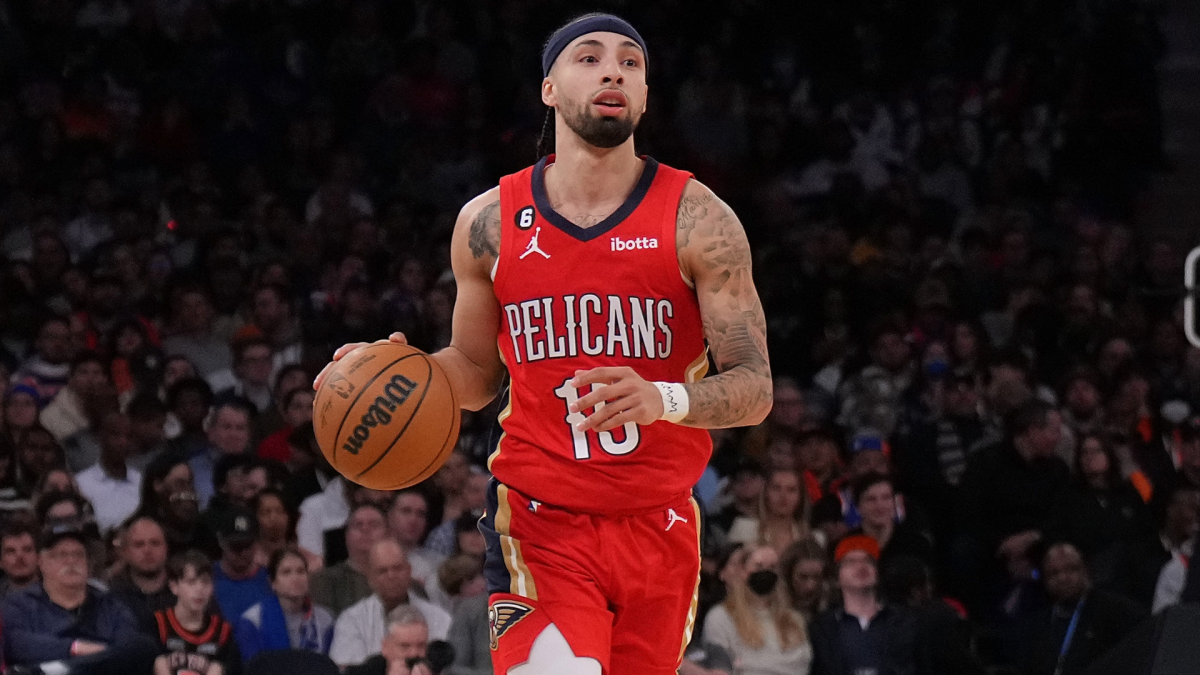
Madison Square Garden highly values two specific qualities: a hardworking role player and a player from New York. Recently, the New York Knicks secured both by acquiring backup guard Jose Alvarado from the New Orleans Pelicans via a loan deal. In exchange, the Knicks traded Darren Terry, whom they had just picked up, along with two second-round draft choices.
Jose Alvarado, originally from Brooklyn and a Queens high school standout, has spent his whole NBA career with the Pelicans, mostly on struggling teams. Now, as part of the Knicks—a team with championship goals—Alvarado’s role-player skills should complement their current roster well. Here’s a breakdown of both teams’ trades.
New York Knicks: Grade A
At the trade deadline, the Knicks operated on a minimal payroll, mostly consisting of Gershon Yabusele and other minimum-salary players. They weren’t willing to part with core players to add expensive talent. Therefore, their strategy was to bring in cost-effective backup players who fit the team culture and could reliably play 10-15 minutes each game. Alvarado fits this description perfectly—he’s comparable to Josh Hart but shorter by six inches. Few guards in the NBA match Alvarado’s intensity; his aggressive defensive style, highlighted by his “Grand Theft Alvarado” steals, is a big plus. Although only about 6 feet tall, he maximizes his physical tools and contributes consistently, especially as a decent shooter when open.
Ideally, the Knicks might have preferred to use this roster spot on a big man, which is why they signed Yabusele initially. With Tyler Kolek’s development, a frontcourt role seemed more secure, but a recent core muscle surgery to key reserve Deuce McBride makes adding a guard more urgent. Alvarado’s arrival addresses that need effectively, making the trade—costing only two second-round picks—an excellent move for the playoffs.
A major advantage is Alvarado’s contract: he holds a $4.5 million player option for next season, which he might forego for a potential four-year, $68 million extension this offseason. This structure benefits the Knicks by keeping their salary cap low next year, especially if they pursue pricey moves or contract extensions like Mitchell Robinson’s. This financial flexibility can help the Knicks manage luxury tax costs without burdening ownership unnecessarily.
New Orleans Pelicans: Grade D
It’s puzzling why the Pelicans never viewed Alvarado as a long-term asset. He’s been with them for five years, during which the team’s net rating was consistently better with him on the floor—often by double digits per 100 possessions. Given their intention to compete rather than tank (evidenced by lack of first-round draft pick and absence of major veteran trades), it makes little sense to let go of a player who consistently improves their performance. Despite this, Alvarado was sidelined at the start of the latest season, an odd decision.
The move likely hinged on finances. The Pelicans hover just below the luxury tax threshold, and retaining Alvarado might have pushed them over. Known for being frugal, the team may have opted to save money by letting him go for a couple of second-round selections.
However, signing Jordan Poole to a hefty one-year, $34 million deal while releasing Alvarado seems contradictory. Saddiq Bey’s contract also expires soon, which means high costs loom for the team’s core in the near future. Management has shown skill in identifying talent but appears less capable in resource management and team building. Alvarado, a local success story, now returns to his home city, while the Pelicans lose a valuable and affordable player without gaining much in return.
Fan Take:
This trade highlights how a player’s value goes beyond just stats and can deeply affect team culture and chemistry. For basketball fans, Alvarado’s move to the Knicks is exciting because it not only boosts their bench strength but also brings a gritty hometown player ready to make a meaningful playoff impact.