

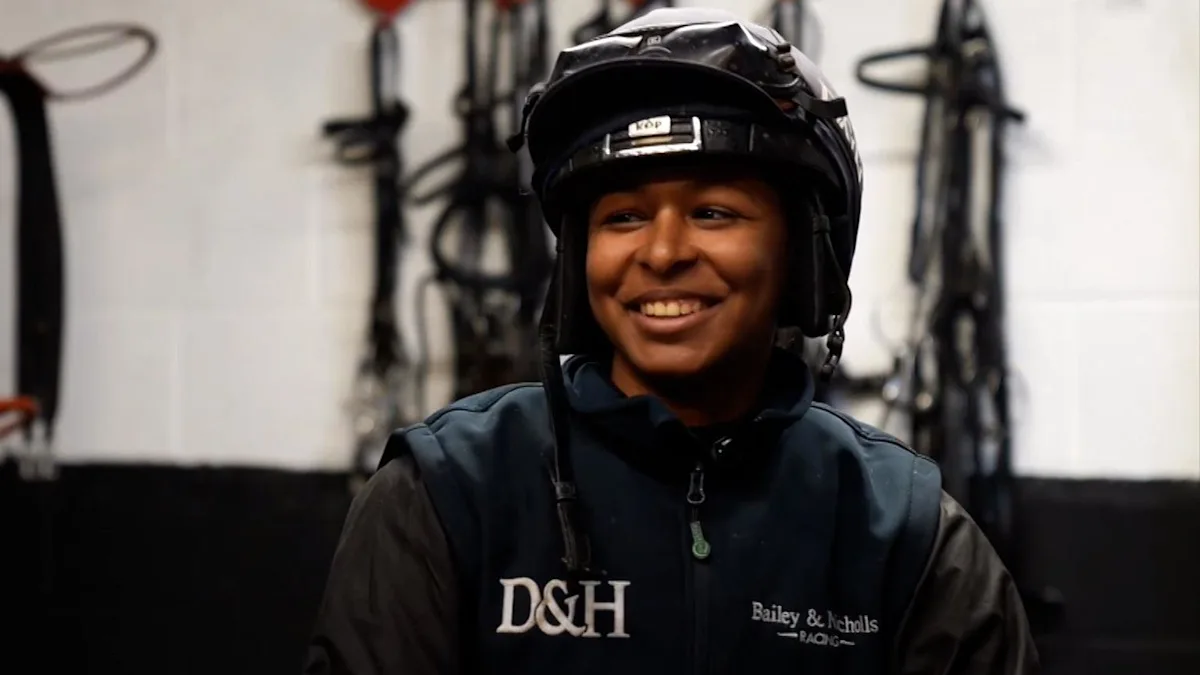
Urmila Aswat is eager to continue making history in horse racing, with her ultimate aim being to compete in the Grand National. Just last week, the 20-year-old made headlines as the first black female jump jockey to win a race in Britain. This milestone came only a few months after she became the first British female jump jockey to participate in a British race.
Aswat was part of the pioneering Riding A Dream Academy scholarship program in 2021-22, during which she completed foundational training at the British Horse Racing School. Her passion for the sport began at the age of five at St James City Farm in Gloucester, and she has since worked alongside trainers Kim Bailey and Matt Nicholls. She first fell in love with racing after competing on ponies at Cheltenham.
Her recent victory marked only the fourth professional win since she earned her jockey’s license in fall 2025. Aswat has spoken about the supportive nature of the racing community, though she admits it can be daunting to be one of the few people of color in the sport, especially at venues like Cheltenham. Trainer Kim Bailey quickly spotted her natural talent and helped secure opportunities to ride, despite the sport often being dominated by jockeys from racing families with strong financial backing.
Bailey acknowledged the challenges Aswat may face, including possible negative attention on social media, but expressed confidence in her strength and potential to become a role model. For Aswat, this role is especially significant as she hopes to inspire others. She looked up to Khadijah Merah, the first British Muslim woman to win a British horse race, and credits her achievements with boosting her own confidence.
Aswat said, “It’s good for myself, but hopefully I’m an inspiration to others. It’s great to be a role model and make people believe in themselves.”
Fan Take: This breakthrough by Urmila Aswat is a powerful moment for horse racing, showcasing much-needed diversity and inspiring a new generation of riders from all backgrounds. Her success signals a more inclusive future for the sport, potentially attracting wider interest and fresh talent to horse racing.