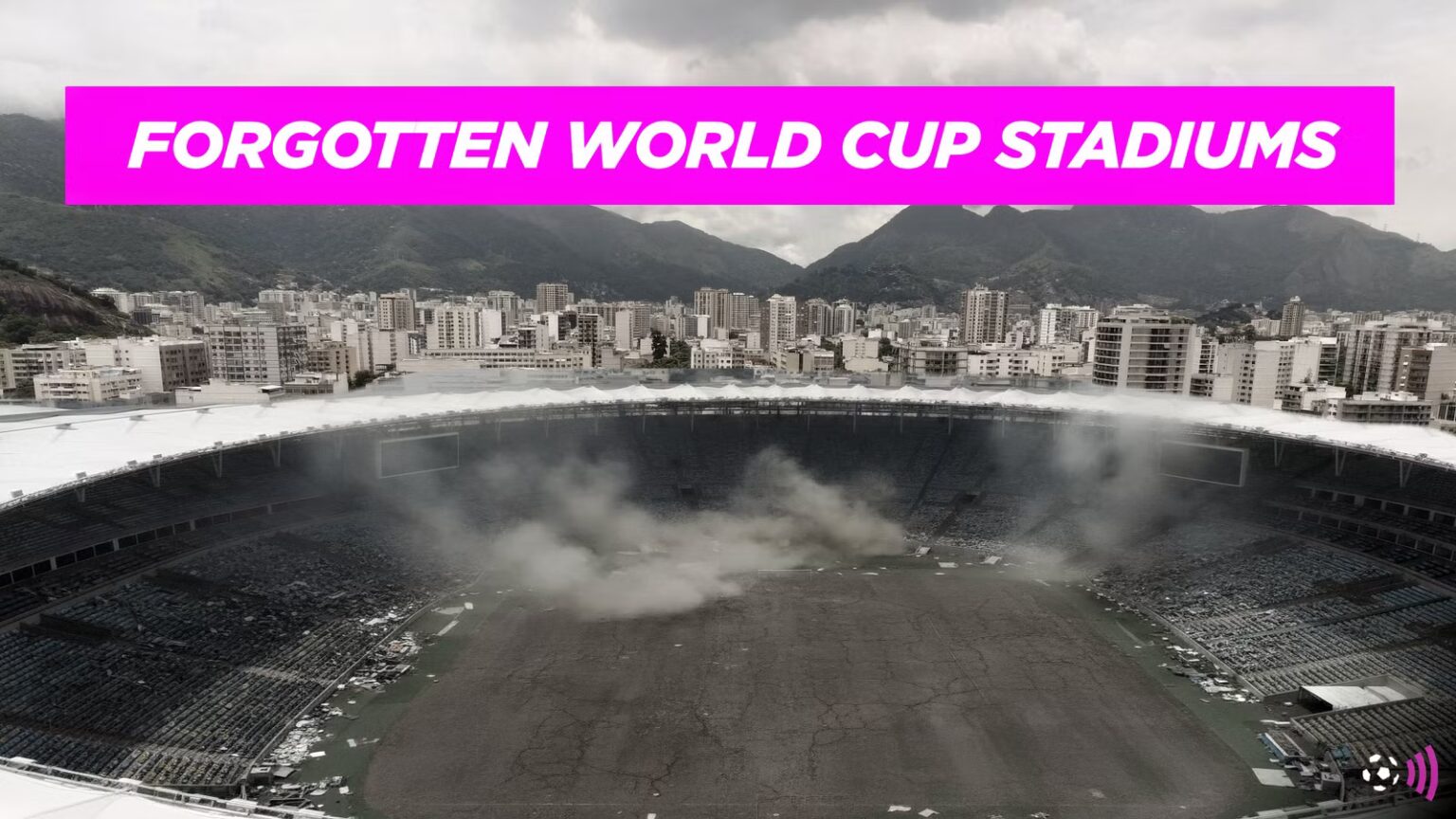
For several weeks, they will be at the center of the sporting world. Crowds roar, cameras flash, and nations celebrate. World Cup stadiums become global icons overnight.
But what happens when the final whistle blows? Arenas built for the world’s biggest competitions are being forgotten, with empty seats, rising maintenance costs and stadiums too large for the cities in which they were built.
From rainforest arenas in Brazil to temporary megastructures in Qatar, these are the most shocking World Cup stadiums that turned into disasters, showing what became of them after the world left them.
Abandoned and underutilized: the white elephant
Mordovia Arena (Saransk, Russia)
Cost: ~$300 million
Capacity: 44,400
Causes of decline: excess capacity in small cities, low sustained demand
Current usage: almost completely abandoned, some sections closed
The Mordovia Arena, built for the 2018 World Cup, remains one of the most obvious examples of overbuilt World Cup infrastructure, being built in a city with limited long-term demand for a stadium of its size. Although impressive during the tournament, many of the stadiums are now in ruins or partially closed. The ground was used by FC Mordovia Saransk until it was disbanded in 2020, and there were no regular tenants.
Arena da Amazonia (Manaus, Brazil)
Cost: ~$270 million
Capacity: 40,500
Causes of decline: remote location, low local demand, lack of permanent top-class clubs
Current use: Occasionally used for matches and events
Arena da Amazonia was one of the most controversial stadiums built for the 2014 World Cup, largely because of its remote location deep in the Amazon rainforest. Although it looks impressive, its long-term viability was questioned from the beginning due to the lack of a major club nearby. The stadium quickly became a symbol of infrastructure built for global attention rather than local needs, and is now primarily used by lower league clubs Amazonas FC and Nacional Futebol Club.
Arena da Amazonia has not been ‘abandoned’ but has only been used by Brazil twice since the World Cup
- September 6, 2016 – Brazil 2 – 1 Colombia (World Cup Qualifier)
- October 14, 2021 – Brazil 4 – 1 Uruguay (World Cup Qualifier)
Financial burden: too big to fail
Mane Garrincha Stadium (Brasilia, Brazil)
Cost: ~$900 million+
Capacity: 70,000
Causes of decline: lack of permanent tenants, low demand for football compared to size
Current use: Occasional soccer matches, concerts, events
The rebuilt Mane Garrincha Stadium is one of the most expensive stadiums ever built for the World Cup, but Brasilia does not have a strong local club culture to keep it full. It is now used for concerts and occasional matches rather than regular soccer. Its long-term financial sustainability remains hotly debated.
Moses Mabhida Stadium (Durban, South Africa)
Cost: ~$450 million
Capacity: 62,000
Causes of decline: lack of permanent soccer tenants, unstable attendance numbers
Current use: mixed-use venue (sports, concerts, tourist attractions)
Moses Mabhida Stadium became one of the iconic images of the 2010 World Cup, primarily due to its dramatic arch design. However, after the Games, the stadium moved to a mixed-use model that included tourist attractions such as skycars and bungee jumping. Although still active, it has failed to achieve the soccer-driven demand originally envisaged and is only used regularly by local team AmaZulu FC.
Rostec Arena (Kaliningrad, Russia)
Cost: ~$295 million
Capacity: 35,000
Cause of decline: Overbuilt to meet local demand, high operating costs.
Current use: FC Baltica home match, low attendance
Kaliningrad Stadium is built on an artificial island, making it one of Russia’s most complex and expensive World Cup venues. Local club FC Baltika Kaliningrad may look impressive, but due to its unique location, it doesn’t always draw enough crowds to justify its operating costs. As a result, they are often criticized as inefficient long-term investments.
Lusail Stadium (Lusail, Qatar)
Cost: ~$1 billion or more
Capacity: 88,966 (scheduled to be reduced to 40,000)
Cause of decline: Designed for tournament-scale use, limited long-term demand
Current usage: Occasional events, no consistent full capacity tenants
Lusail Stadium was the centerpiece of the 2022 World Cup and hosted the final, but its long-term purpose is now virtually non-existent. Built as part of Qatar’s mega-infrastructure push, the facility was designed for global peak times rather than continued domestic use. After the tournament, there is currently no consistent tenant and capacity will be reduced by more than 50 percent.
Built for a moment: The disappeared stadium
Stadium 974 (Doha, Qatar)
Cost: ~$700 million
Capacity: 44,089
Cause of decline: Designed as a temporary stadium
Current use: Partially demolished and materials reused or relocated.
Stadium 974 is unique on this list because its “abandonment” was intentional from the beginning. Built entirely out of shipping containers and designed to be demolished after the World Cup, it became the first completely temporary stadium in the tournament’s history. Unlike others that have become underutilized, this one was designed to disappear.
Player with the most appearances in the Men’s World Cup
Some players are lucky enough to have played in multiple World Cup finals.
Then the lights go out and the crowd moves on. What were once symbols of pride and global celebration are often left as monuments to the past.
Some are reused and revived to give them new life, while others remain as silent reminders of the cost of hosting the world’s biggest stages.