
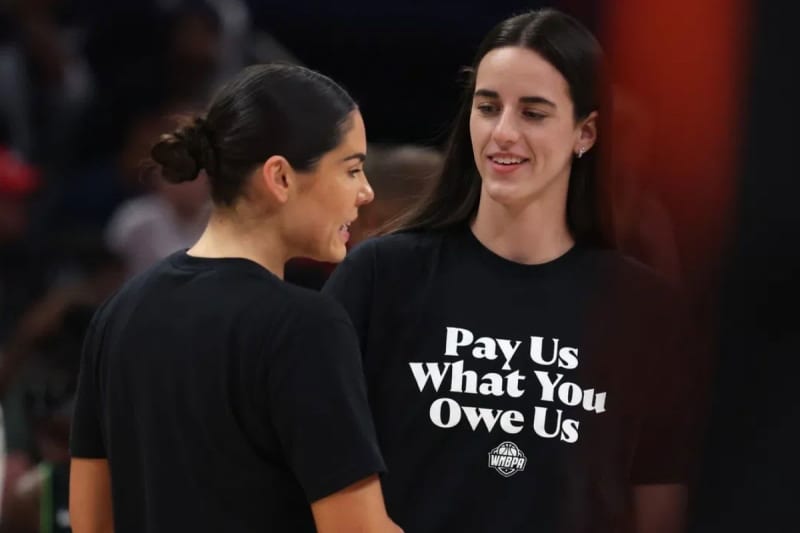
It’s evident that the WNBA and WNBPA must find common ground on the upcoming Collective Bargaining Agreement (CBA). As one player told ESPN, “That’s literally what negotiations are about.” However, more than a year after talks began, a resolution remains out of sight. Despite recognizing the need for compromise, both parties remain firm in their positions, with the WNBA dismissing the WNBPA’s most recent proposal.
A significant divide persists over revenue sharing. The players have reportedly requested 30% of net revenue (profit before expenses), while the league asserts it currently provides 70% of total revenue. This offer was made nearly a month ago, and one would expect progress toward a middle ground by now. Unfortunately, the WNBA has yet to respond, maintaining the same stance as before.
As ESPN’s Alexa Philippow reported, “The National Women’s Basketball Players Association is still waiting for a formal response from the league after submitting its proposal a month ago.” Sources tell ESPN the league sees little difference between this and previous proposals, and it is instead waiting for a “more realistic” offer from the players.
With the 2026 season tip-off just three months away on May 8, the outlook grows increasingly bleak. The WNBPA has granted its leadership the authority to call a strike if necessary. Many fans have grown frustrated with the players’ union and, as talks drag on without updates, they feel powerless.
The WNBPA’s latest proposal seems to have backfired, as some fan sentiment shifts against the players’ union. Comments like “You asked for too much” and “I shot myself in the foot lol” signal a change in tone that would have been unlikely months ago. While these views remain in the minority, growing exhaustion is evident. Some fans now believe the WNBPA is impeding progress, given the league’s offer of record salaries exceeding $1 million and revenue sharing. Additionally, the WNBA reportedly estimates that the union’s proposal could lead to a $700 million loss.
Rebecca Lobo has already noted this dwindling fan support, saying, “As negotiations progress, I feel like some (fan support) is waning. And I think part of it was the language and language that we heard from the players’ association and things like that.” Despite this, WNBPA leaders, including Nneka Ogwumike and Nafeesa Collier, remain steadfast, though fans are calling for changes in union leadership.
This negotiation impacts all players, but the stakes vary. Top earners like Caitlin Clark and Angel Reese have lucrative off-court contracts cushioning their income, so while higher salaries benefit them, financial urgency is less pressing. In contrast, players earning lower salaries often need to participate in off-season leagues to make ends meet, making pay raises critical for their livelihoods.
Some fans wonder when an independent arbitrator might be brought in to break the deadlock. NBA Commissioner Adam Silver has offered to mediate but faced pushback after stating that focusing on “shares” of revenue isn’t the right approach and emphasizing “absolute numbers” instead. His ties to the NBA also complicate perceptions of neutrality. Without progress, the league risks the worst-case scenario: a strike.
“I hope everyone involved understands that 2027 doesn’t matter if there is no 2026 season,” one fan wrote. “A lot of fans are fine with 3×3 reality TV hoops, so they’ll be fine. For the rest of us, it’s going to be terrible.” While it is true that fan interest would suffer if the 2026 season were canceled, many basketball enthusiasts lack the patience to wait indefinitely. Some might turn to alternatives like Project B, which shares the 5-on-5 format but lacks the WNBA’s financial backing and exposure. Ideally, the WNBA will resolve this standoff, as fans’ primary concern is not who wins the negotiation but whether the league can successfully launch the 2026 season.
The original article “WNBA fans see new problems with CBA, league demands ‘more realistic’ proposal” was first published on EssentiallySports.
Fan Take: This ongoing stalemate is critical for WNBA fans because it directly threatens the 2026 season and the sport’s momentum. Without a timely agreement, the league risks losing both fan interest and player trust, which could have lasting impacts on the growth and popularity of women’s basketball.