Since 1990 there has always been at least a four-team turnover of non-playoff clubs reaching the postseason the following year — and the 2025 campaign may have been the most extreme example of that trend. The 2025 playoff field showed how wide the NFL’s parity can be: five playoff teams bounced back from losing records (the most in 11 years), four division winners advanced with five or fewer wins, and three clubs climbed from the bottom of their division to first place. When teams can flip from worst-to-first in a single season, nothing is guaranteed.
Here are five teams that look most likely to slip in 2026.
Chicago Bears
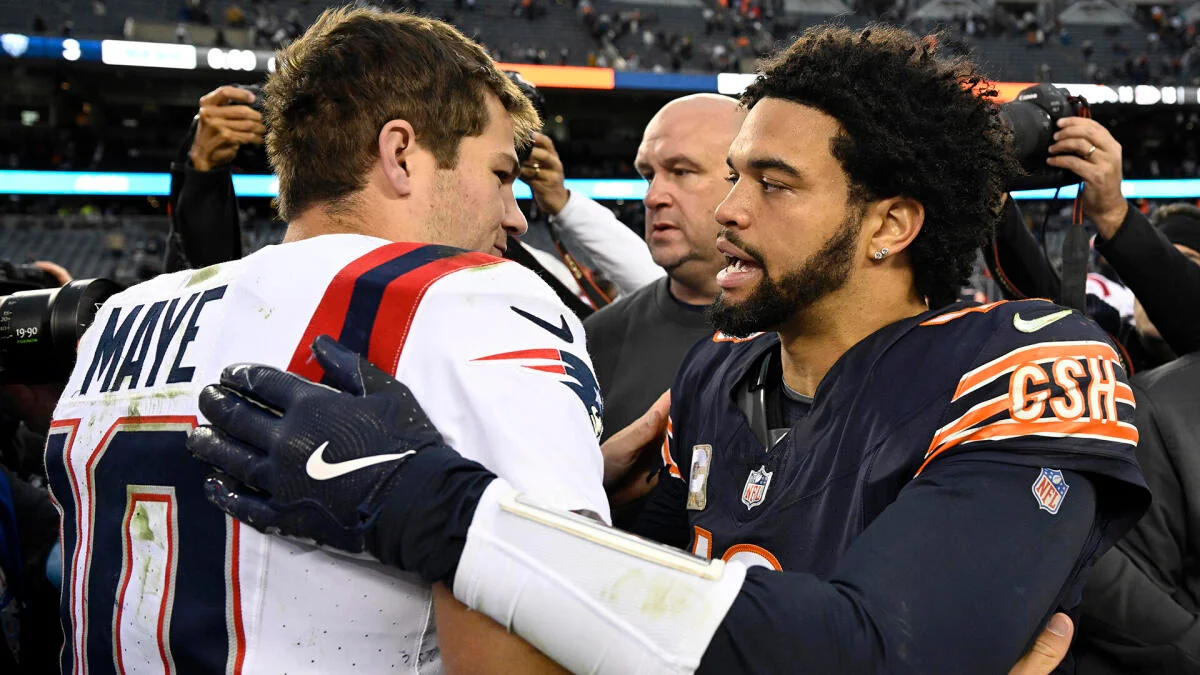
Chicago played more tight games than any other team in 2025, compiling an unprecedented number of comeback and one-score victories. Much of their success came in close finishes — they won eight games by seven points or fewer (including the postseason) and set a mark for wins when trailing late — a style that commonly regresses toward the mean. Their cap picture is thin: OverTheCap projects Chicago to enter the 2026 offseason with about minus $9.5 million in “effective” cap space after accounting for rookie class costs, which will limit upgrade opportunities. Offense was solid (about 25.9 points per game, ninth in the NFL) but the defense finished near the bottom third of the league in points allowed (roughly 24.4). Key defensive playmakers — All-Pro safety Kevin Byard (led the league with seven interceptions), Jaquan Brisker, nickel CJ Gardner-Johnson and cornerback Nahshon Wright (one of the NFL leaders in total takeaways) — could all be free agents, and the potential loss of those turnover creators (they combined for a large share of Chicago’s turnovers) would weaken a defense that the team can’t easily afford to retool. With their young quarterback still on a rookie deal, 2025 may have been the Bears’ best window to make a deep run.
Denver Broncos
Denver’s 14 regular-season wins featured an astonishing number of come-from-behind victories — 12 of those wins required erasing deficits — establishing a new NFL mark for comeback wins. They also tied recent high-water marks for one-score wins, a category that has bitten other teams before (the Chiefs’ 11 one-score wins in 2024 were followed by a collapse in 2025). On offense, questions remain around Bo Nix: while his counting stats were solid, several efficiency measures and yards-per-attempt placed him in the lower tier among qualifying quarterbacks, and he was coming off an ankle fracture — all reasons to worry about sustained performance. Denver’s defense should remain a strength with Vance Joseph back and most starters in place, but offensive uncertainty around Nix means the Broncos’ record could look quite different next year.
Pittsburgh Steelers
Pittsburgh captured the AFC North in 2025 with Aaron Rodgers starting, but Rodgers will be 43 in December and is due to hit free agency; the hiring of Mike McCarthy as head coach makes a Rodgers return more likely, but it isn’t guaranteed. The roster lacks proven receiving depth beyond DK Metcalf, so even if Rodgers does come back he will be older and more fragile. The team projects to have roughly $39.3 million in cap space, which could allow for upgrades, but their realistic ceiling with an aging quarterback is probably around a 10–7 season — and an injury that forces in Will Howard or Mason Rudolph as the starter would likely produce a sharp drop-off.
New England Patriots
New England’s 2025 AFC title team finished 14–3 against the league’s softest strength of schedule (.391 opponents’ win percentage), the weakest since the 1999 Rams. CBS research found that 11 of their 17 regular-season opponents won’t have the same head coach in 2026, tying an NFL record for head-coaching turnover among opponents — a reflection of how favorable their 2025 slate was. Their postseason road was also aided by opponents dealing key injuries (Chargers missing starting tackles, Texans without top receiving targets, Broncos forced to start Jarrett Stidham for an injured Bo Nix), and the Patriots were beaten convincingly by a healthy Seahawks in the Super Bowl, 29–13. It’s easy to envision New England losing four or five regular-season wins if they face a much tougher schedule and more intact opponents next year.
Philadelphia Eagles
Philadelphia’s offseason and coaching situation is unsettled after a drop-off from Super Bowl winners in 2024 to a Wild Card exit in 2025. Defensive coordinator Vic Fangio has stayed on for now, but the staff saw turnover — offensive coordinator Kevin Patullo and long-time offensive line coach Jeff Stoutland departed, and secondary coach Christian Parker left for Dallas; the Eagles promoted Sean Mannion to offensive coordinator. On the field, the offense cooled: the rushing attack fell from second in the league in 2024 (about 173.9 rushing yards per game) to 18th in 2025 (roughly 116.9), and Jalen Hurts posted career lows for yards per attempt (about 7.1) and a below-par completion rate (64.8%). If the new scheme and play-caller can’t restore Hurts and the run game, Philly could be facing another down year.
Fan Take
This kind of widespread turnover matters because it keeps every NFL season unpredictable — teams can surge or collapse year to year, which fuels storylines, betting swings and roster urgency. For fans, that means every offseason decision (contracts, coaching hires, medical recoveries) can meaningfully reshape title hopes and keeps the league compelling and unsettled.