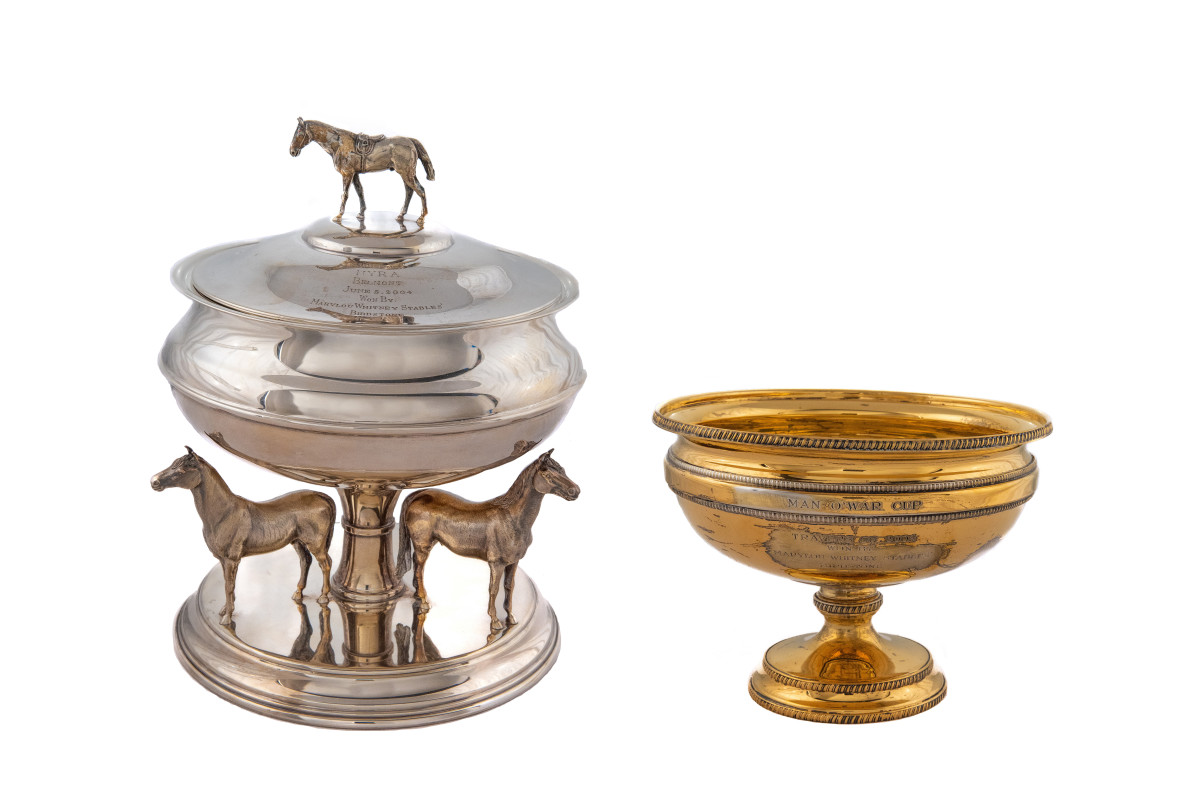
The Whitney Family Collection, one of the most significant trophy assemblages in American Thoroughbred racing history, was generously donated to the National Horse Racing Hall of Fame and Museum by the late John Hendrickson, the museum’s former president, who passed away unexpectedly in August 2024. The collection comprises over 400 trophies, including eight Triple Crown race trophies won by horses owned by the Whitney family, along with many trophies celebrating victories by Hall of Fame legends such as Equipoise, Regret, Silver Spoon, Top Flight, and Whisk Broom II. These trophies represent achievements of horses owned by notable figures like William Collins Whitney, Harry Payne Whitney, Cornelius Vanderbilt Whitney, and Hendrickson’s late wife, Marylou Whitney.
Museum Director Charlotte Webber remarked, “The Whitney family’s legacy in American horse racing spans more than 125 years and is extraordinary. The National Horse Racing Hall of Fame and Museum is privileged to be the caretaker of this remarkable collection, reflecting a family’s lasting, multi-generational passion and triumphs in the sport. We look forward to sharing these historical treasures with the public.”
The oldest trophy in the collection is from the 1899 Belmont Stakes, won by Jean Bellow in record time at Morris Park for William Collins Whitney, founder of the Whitney racing dynasty. The collection also includes four other Belmont Stakes trophies for Burgomaster (1906), Phalanx (1947), Counterpoint (1951), and Birdstone (2004).
Among other prized trophies are Kentucky Derby awards won by Regret (1915), the first filly to claim the race, and Whiskery (1927). Harry Payne Whitney’s horses Bloomspan (1921), Bostonian (1927), and Victorian (1928) won the Preakness Stakes in the 1920s, celebrated with a unique Woodlawn Vase Trophy recognizing all three.
Additional highlights feature Ashland Stakes trophies won by You All (1971) and Sun and Snow (1975), Bluegrass Stakes trophies for Mr. Trouble (1950) and Tompion (1960), Futurity Stakes for Top Flight (1931) and First Flight (1946), and Jockey Club Gold Cups for Phalanx (1947) and Counterpoint (1951). Kentucky Oaks trophies include Bug Brush (1958), Bag of Tunes (1973), Sun and Snow (1975), and Bird Town (2003). The Santa Anita Derby trophies honor Silver Spoon (1959) and Tompion (1960), while Santa Margarita Stakes trophies were won by Monsoon (1947), Bug Brush (1959), and Silver Spoon (1960).
The collection also boasts Saratoga Special trophies awarded to Regret (1914), Goshawk (1922), Witch One (1929), Red Rain (1935), and Banquet Table (1976), plus Travers Stakes trophies for Fisherman (1954), Tompion (1960), Champion (1968), and Birdstone (2004). Whisk Broom II notably won the Metropolitan, Brooklyn, and Suburban Handicap trophies in 1913, becoming the first horse to sweep the New York Handicap Triple Crown, a feat praised for demonstrating unmatched speed, courage, and stamina.
Selected pieces from the Whitney Trophy Collection are currently exhibited at the McBean Gallery until December 28th, with a formal showcase planned for 2027 to coincide with the 100th running of the Whitney Stakes at Saratoga Race Course.
Key trophies in the Whitney Family Collection include:
– Kentucky Derby: 1915, 1927
– Preakness Stakes: 1921, 1927, 1928 (one trophy for all three)
– Belmont Stakes: 1899, 1906, 1947, 1951, 2004
– Ashland Stakes: 1971, 1975
– Bluegrass Stakes: 1950, 1960
– Futurity Stakes: 1931, 1946
– Jockey Club Gold Cup: 1947, 1951
– Kentucky Oaks: 1958, 1973, 1975, 2003
– Santa Anita Derby: 1959, 1960
– Santa Margarita Stakes: 1947, 1959, 1960
– Saratoga Special Stakes: 1914, 1922, 1929, 1935, 1976
– Travers Stakes: 1954, 1960, 1968, 2004
For further details about the National Horse Racing Hall of Fame and Museum and upcoming events, visit racingmuseum.org or call (518) 584-0400.
Fan Take: This monumental donation not only preserves the rich legacy of the Whitney family but also offers horse racing enthusiasts a tangible link to the sport’s golden history. Showcasing these trophies keeps the inspiration alive for future generations and highlights the enduring prestige and excitement of Thoroughbred racing.