

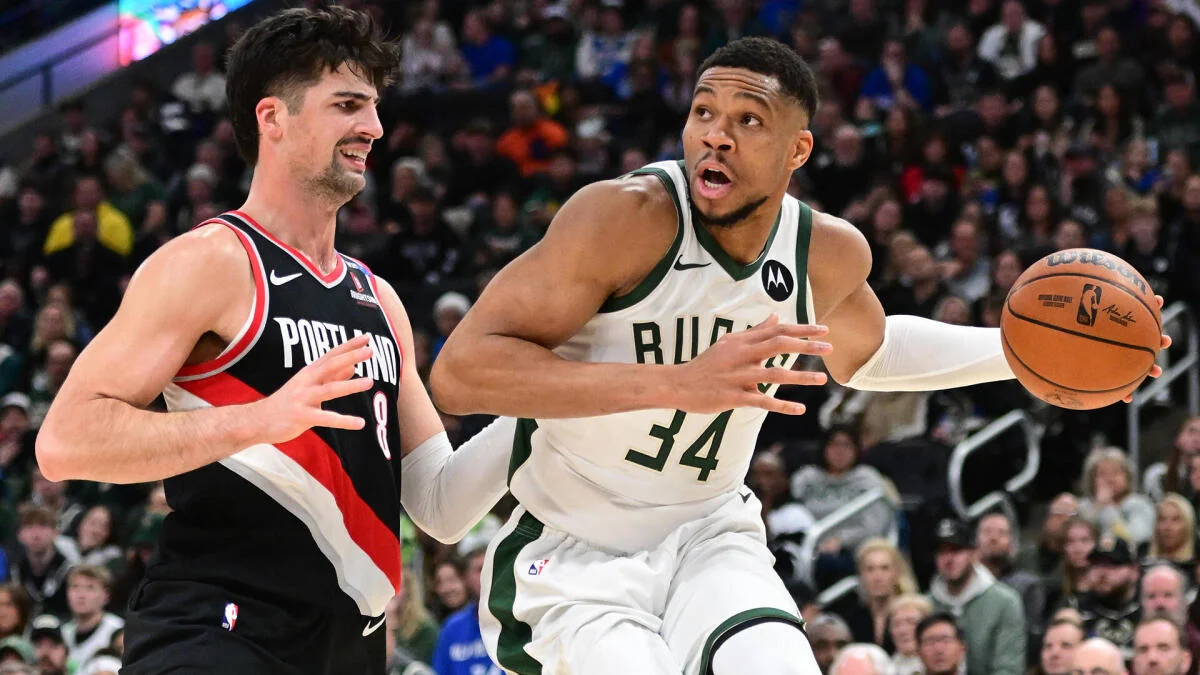
The Milwaukee Bucks have faced constant pressure all season concerning the likely trade of Giannis Antetokounmpo. Had they moved earlier, they might have secured a more impressive return for the two-time MVP, with attractive trade possibilities from teams like the Spurs and Rockets last summer. However, as those teams’ interest faded, the Bucks were left sorting through less favorable offers. Trading Giannis for players like Karl-Anthony Towns or Mikal Bridges wouldn’t significantly boost Milwaukee’s future, and while Golden State’s draft picks hold intrigue, they remain uncertain assets. Milwaukee’s biggest challenge is that Giannis can become a free agent in 2027, leaving the Bucks powerless to either command a fair trade value or risk losing him for nothing.
Recently, the Portland Trail Blazers have emerged as suitors. Reporters Marc Stein and Jake Fischer revealed Portland’s interest in acquiring Giannis, even though they realistically understand that convincing him to sign an extension in Portland is a distant prospect. For the Bucks, the Blazers’ involvement is pivotal. If Portland can either secure Giannis for the long term or is prepared to trade him without that assurance, it would transform the trade market, giving them the upper hand in negotiations and potentially enabling Milwaukee to receive the best trade package.
Why are the Blazers so crucial to this equation? Typically, the greatest asset a team gains in trading a superstar is control over top draft picks, often referred to as “extra lottery balls.” Historical trades like those involving Chris Paul, Anthony Davis, and James Harden highlight the immense value of draft picks in rebuilding. Unfortunately for Milwaukee, they no longer own their own first-round picks through 2030, as many have been traded away in prior deals, including those involving Jrue Holiday and Damian Lillard. Some of these picks belong to other teams like Atlanta and New Orleans, complicating Milwaukee’s chances to rebuild independently.
However, from 2028 to 2030, those first-round picks belong to Portland through the Lillard trade, and they have the option to return control of those selections to Milwaukee. Utilizing Portland as a middleman or directly acquiring those picks via a deal with the Blazers could provide Milwaukee a rare opportunity to control its own rebuilding resources. For example, one of the best hypothetical trade packages includes multiple future first-round picks and a valuable pick swap option from Golden State, though future Warriors teams remain an unknown variable. In contrast, Milwaukee can better assure high draft positions by receiving picks they truly control, especially from the Blazers.
The Blazers could also structure the trade similarly to how Houston managed their picks with the Nets, strategically hedging their future assets. Portland has adequate young talent and draft assets to offer the Bucks valuable picks from 2028 and 2029, potentially keeping the 2030 selection for themselves. While there are complexities due to prior trades—especially concerning the 2028 pick and protections linked to Chicago—the Blazers could negotiate with the Bulls to regain control of relevant picks, enabling a smoother transaction that benefits both teams.
Addressing salary matching in the deal, Jerami Grant’s $32.4 million contract would likely be included, along with the 2023 No. 2 overall pick Scoot Henderson, who hasn’t played this season due to injury but could thrive in Milwaukee’s shooter-friendly environment. Portland may also move talented players like Deni Avdija, who combines potential with a cost-effective contract, essential for building around Giannis. Additionally, Milwaukee might target promising players such as Toumani Kamara, Donovan Clingan, Jan Hansen, or Shedon Sharpe as part of the exchange.
However, trade logistics concerning draft pick rights are complicated. Portland retains swap rights on Milwaukee’s 2030 pick but could waive those. For 2029, Portland owns three picks (its own, Milwaukee’s, and Boston’s) but would likely agree to give Milwaukee the best of the three. The 2028 pick is trickier due to previous trades involving Chicago and Washington, and protections on Portland’s own picks. To resolve this, Portland must negotiate with Chicago, possibly by removing protections on an earlier pick or offering other compensation, thus regaining control of the 2028 pick to trade to Milwaukee.
The biggest question remains whether Giannis would actually re-sign with Portland. Without that assurance, the Blazers’ offer loses much of its appeal to the Bucks. Giannis can’t officially sign a contract extension until October, three years after his current one started, so his motivation to get traded before the deadline is high to maximize his contract potential. Meanwhile, the Bucks might prefer a summer trade when more teams, such as the Spurs, Rockets, or Magic, could enter the picture after salary cap adjustments.
In a scenario where no other team makes a suitable deadline offer, the Bucks might push Giannis toward Portland, prompting him to decide between an immediate trade with extension eligibility or waiting for a preferred destination in the summer. Portland’s roster features familiar faces like Jrue Holiday and Damian Lillard, possibly appealing to Giannis if he values those connections. The Blazers have more flexibility to build a meaningful team without giving up everything, making their interest significant even if not guaranteed to culminate in a signing.
Ultimately, concerns about Portland’s climate, locale, and competitiveness in the Western Conference may reduce the likelihood of Giannis breaking his tendencies and committing long-term there. Yet, the fact that Portland shows genuine interest increases pressure on other teams with fewer assets to improve their offers. Giannis’ openness to other smaller markets, like Minnesota, also leaves a narrow but real path for a trade before the deadline.
Fan Take: This developing trade scenario around Giannis Antetokounmpo is a thrilling saga for basketball fans because it highlights the high stakes and strategic intricacies of superstar transactions. Where Giannis lands could reshape the NBA landscape for years and set new precedents on how teams leverage draft assets and player extensions in blockbuster trades.