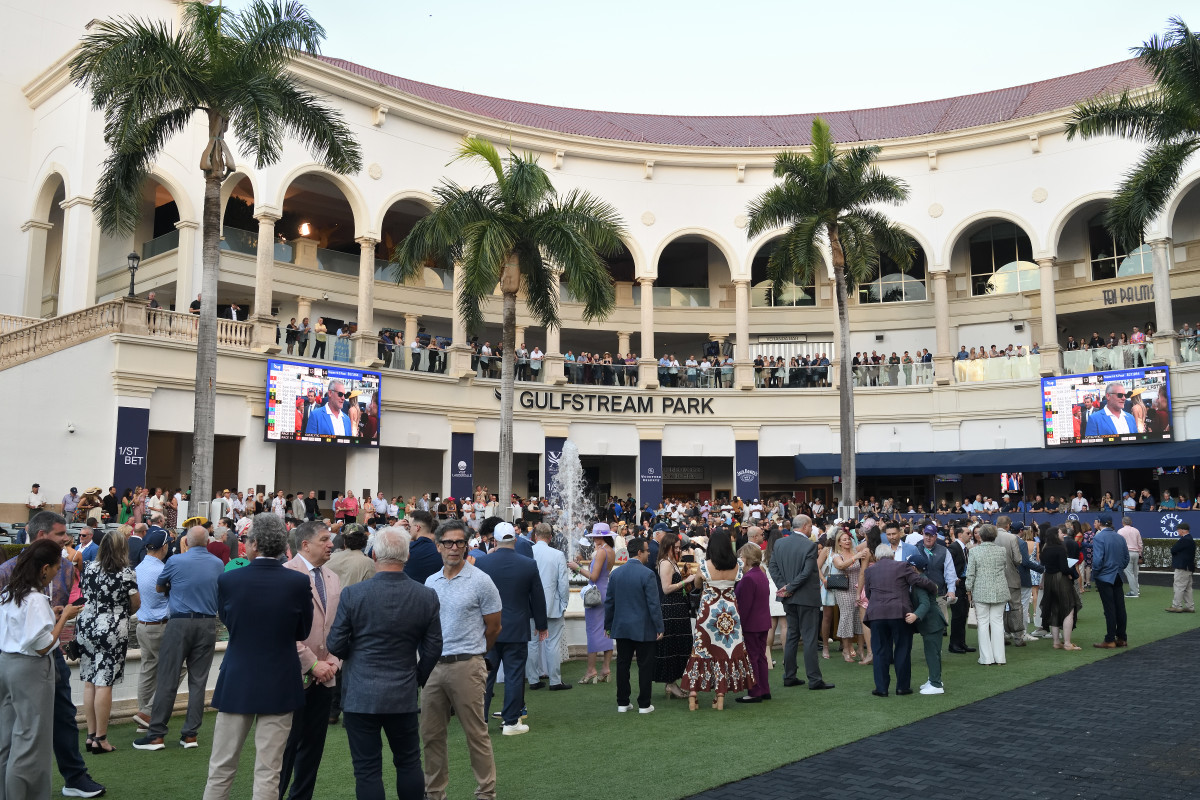
The ongoing legislative battle over the future of horse racing in Florida took a new turn in the House of Representatives on February 3rd. House Bill 881 was slated for review in the Florida House Commerce Committee that Tuesday. However, on January 30th, an updated version of the bill—the “Committee Alternative”—was released, featuring provisions that allowed live racing at the training center and Hialeah Park, and guaranteed live racing at Gulfstream Park through at least 2030.
That version has now been completely removed.
Late on the night of February 2nd, Representative Adam Anderson (R-57th District), the bill’s sponsor, presented a new, simplified “strike-all” version of the decoupling bill. This revision eliminated the language that previously secured live racing at Gulfstream until 2030 and removed nearly all other provisions from the earlier draft.
What remains is the decoupling policy, meaning Florida racetracks will no longer be required to conduct live thoroughbred races to keep their slot casino licenses.
“This bill is the racetrack exit plan,” Lonnie Powell, CEO of the Florida Thoroughbred Breeders Association (FTBOA), said during public testimony. “It forces horse owners, trainers, breeders, and the state to pay taxes to Canadian firms in Toronto, all while horses are pushed out of the industry.”
Tom Ventura, president of Ocala Breeders Sales, added, “This bill favors one company at the expense of an entire iconic industry in our state. It’s time to put decoupling to rest. Casinos operating without live racing damage the economy and undermine the multi-billion-dollar Thoroughbred sector.”
Following half an hour of public comments, the House Commerce Committee approved the bill with a 15-10 vote, sending it to the full House for further consideration.
After the committee meeting, Chairman Powell stated: “The amendments made today address some concerns raised in previous anti-decoupling testimony, especially regarding authorization language. Nonetheless, the core threat posed by decoupling remains.”
He continued, “FTBOA and industry partners are working on a live racing replacement strategy to compensate for Gulfstream’s likely exit, but it will require time and support—neither of which this bill provides.”
Powell also noted that, to date, no public or racetrack testimony has supported decoupling, making it remarkable that this controversial bill continues without a single advocate.
“As the bill progresses, we stand united with horsemen, breeders, owners, trainers, and partners to protect this crucial agricultural industry,” he affirmed.
The Florida Jockey Benevolent and Protective Association also released a statement opposing the bill. Florida HBPA President Tom Cannell said, “The bill paves the way for separation without warning and restricts future licensing, threatening the livelihoods of many Floridians dependent on this lifestyle. It will deeply alter rural and undeveloped Florida and is not the future we want. Breaking down this vital industry will have lasting, harmful effects statewide.”
In the Florida Senate, a companion bill—SB 1564—has been introduced, though it has faced stronger resistance and has not yet been scheduled for a committee hearing.
This article was first published by Paulick Report on February 3, 2026, within the News section.
Fan Take: This development is crucial for horse racing fans because it signals a potentially dramatic shift away from live racing in Florida, a cornerstone of the sport’s American tradition. If decoupling moves forward unchecked, it could erode the very foundation of Thoroughbred racing in the state, threatening its economic health and legacy for years to come.