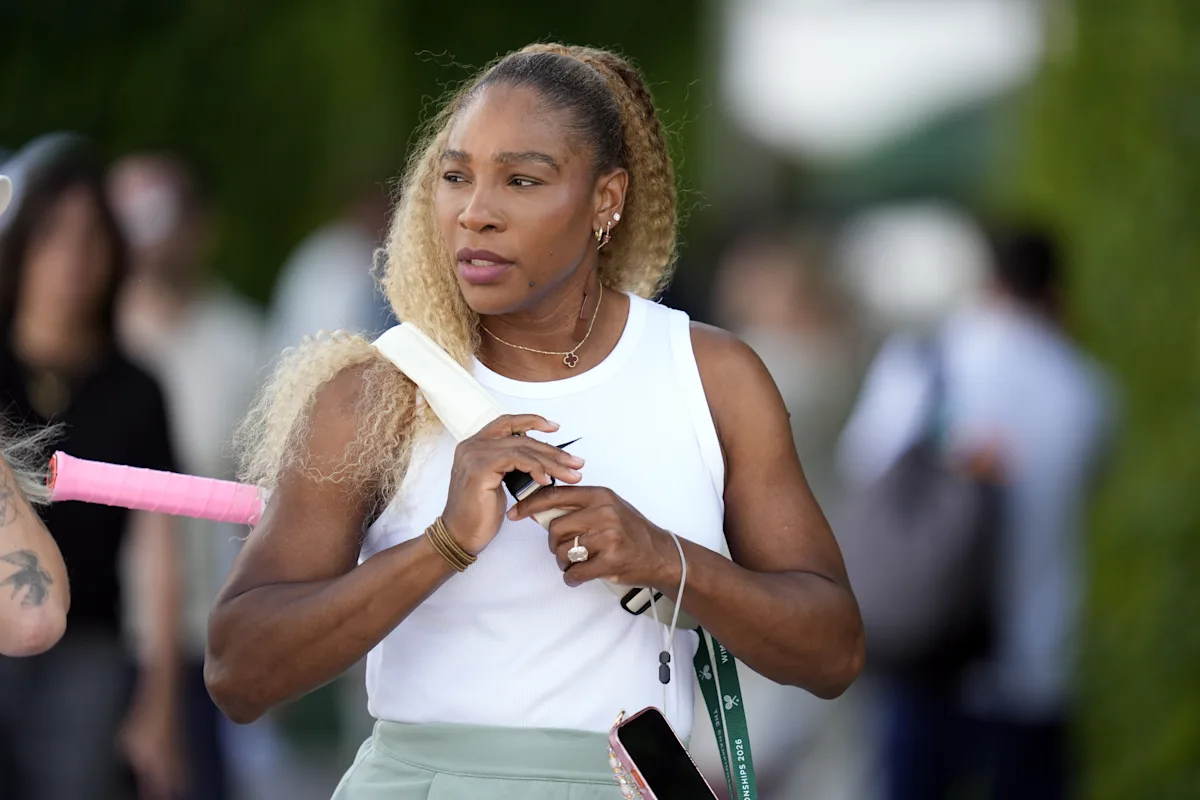
Serena Williams will play professional tennis again. That means you have to make some sacrifices.
Ahead of her first singles match in nearly four years at Wimbledon, the 23-time Grand Slam champion spoke to reporters and shared her thoughts on the sport’s handling of anti-doping protocols.
advertisement
Williams is not a fan:
“It’s tough. The rules have changed. I didn’t know some of the rules. Apparently, if you miss a test right out the window, it still counts as an absence. I’m like, ‘I might not be able to pick up my kids.'” I don’t think that’s professional. I don’t like it. I think that’s necessary, and I think about it often, but if you want to go somewhere outside the window, you should be able to go without it counting as a missed test.
“There’s got to be another way to make it reasonable, because it’s totally irrational. That was also a big reason why I didn’t want to go back, because it’s just too hard. My life is busy. I run a company, I run a VC firm, I travel all over the world, I have kids. It’s like I can be in so many different cities, so many different times.”
Williams, 44, is not the first tennis player to complain about the restrictions these protocols have placed on their lives. Every top player seems to have a story of being inconvenienced in some way by the sudden appearance of a tester.
The system requires the world’s top 100 singles players to provide one hour of testing each day to the International Tennis Integrity Agency. They are also required to keep the ITIA updated on their whereabouts, down to their hotel room number, as tests may be conducted outside of that period. Players must ensure they are tested or face significant sanctions. For example, American player Jenson Brooksby was suspended for 18 months (later reduced to 13 months) for missing three tests in one year.
Serena Williams, like other players in the sport, has not enjoyed her time working with tennis’ anti-doping protocols.
(Tim Clayton, via Getty Images)
More recently, there has been the case of former Wimbledon champion Marketa Vondrowšová, who was suspended for four years in December last year for completely refusing to take a home drug test. She blamed the incident on an “acute stress reaction” that impaired her judgment, but ITIA officials pointed out that Ms. Fondrousova signed a form confirming her refusal and then went out to walk her dog. Under ITIA rules, refusing to submit to a test is considered as bad as a positive test.
advertisement
In response to Williams’ complaint, ITIA noted in a statement to The Associated Press that the rules have been the same for some time.
In response to Williams’ comments, the ITIA told The Associated Press that the rules have been the same for years.
“If a tester fails to contact a player within the allotted time, it is likely to be a ‘strike,’ and three failures may result in prosecution. If a tester fails to contact a player outside of the allotted time, it will not be considered a strike,” ITIA said of the whereabouts rule.
In order to resume elite tennis, Williams had to re-enter the anti-doping testing pool last September and undergo six months of clean testing before being cleared to play again.
Incidentally, this is why Williams’ denial that he was returning after rejoining the test pool was greeted with some skepticism. No one would be comfortable going through this kind of thing, especially considering Williams complained about anti-doping protocols before his first retirement.
advertisement
Williams is scheduled to begin Wimbledon singles play against 20-year-old Maya Joynt on Tuesday, and will play doubles with her sister Venus on Thursday against the pair of Solana Sierra and Camila Osorio.
Williams has played in two doubles matches so far in her surprise return, winning her debut match alongside Victoria Mboko at Queen’s Club before withdrawing due to Mboko’s injury, before losing her first match in Berlin alongside Karolina Muchova.